Kulinary Adventures of Kath

Food Photography, Recipes & Baking
  • home
  • About
  • Work with Kath
  • Shop
  • Blog
    • The Blog
    • Recipe Archive
  • Newsletter
  • Contact
  • home
  • About
  • Work with Kath
  • Shop
    • The Blog
    • Recipe Archive
  • Newsletter
  • Contact
Raspberry Pistachio Rose Cake (23 of 25).jpg

The Blog

Recipes and Food Photography by Kath Vincent.

  • The Blog
  • Recipe Archive
  • All
  • Biscuits/Cookies
  • Breads Etc.
  • Breakfast
  • Cakes & Slices
  • Confectionary
  • Drinks
  • Events
  • Food Photography Tips
  • From The Mailing List
  • Heirloom Recipes
  • Holidays
  • Ice Cream
  • Jams Preserves & Spreads
  • Muffins
  • Off the Shelf
  • Other Desserts
  • Savoury Dishes/Meals
  • Scones
  • Tarts & Pastry
  • Travel
Ginger & Quince Cake with Quince Ice Cream

Ginger & Quince Cake with Quince Ice Cream

How to Bake with Quinces - Ginger & Quince Cake with Quince Ice Cream

Kath August 17, 2017

I seem to have a thing with ginger lately. Maybe it’s just that the warming nature of such spices go so well with Winter, or maybe I’m just a creature of habit. I haven’t always been this on board with ginger, I actually used to hate it. As a child the heat of it was too overpowering for me, and only very mild gingerbread biscuits would do. I remember the one time we all went overseas to the UK as a family, I was about 8 years old, and I become enamoured by Harrods - the lovely building, their constant use of teddy bears, all the food, and the fact they had a shop at the airport. When we were at Heathrow on our way home, I convinced Mum to buy a packet of Harrods Gingerbread as a snack for the plane. 

No doubt the packaging grabbed me, I’m sure it was cute enough to grab a child’s attention. Eating them on the plane, my mouth was on fire. They were so gingery, more than my underdeveloped taste buds could handle. I probably annoyed the air hostesses by asking for so many glasses of water, as I continued to eat the spicy gingerbread men despite the heat - probably as Mum had drilled into me how expensive they were (back then the Pound to Australian Dollar conversion was even worse than it is now), and to be honest as a picky eater I probably preferred them to the airplane food. 

Many years later, after making many a gingerbread man myself, I suddenly realised any aversion to ginger was long gone. I was walking back to the station from my internship, which conveniently meant walking past Bourke Street Bakery. I didn’t stop in very many times over the course of my internship, but the first time I did I decided to get one of their famous Ginger Brûlée Tarts. As I was close to finishing the tart, I realised I really couldn’t taste any ginger. The tart was nice, but thinking I still wasn’t a big ginger fan, I expected the flavour to hit me in the face. It was then I realised I must like ginger much more than I realised, and just kept thinking I didn’t as I hadn’t when I was younger. In fact, I liked it a lot, along with a few other things I hated as a child. 

So now I jump at any opportunity to cook with ground ginger in particular, and this cake is no exception. This cake paired with the quince ice cream is a seriously good way of celebrating the colder seasons (even though it seems to be warming up a little now!) and a good way of using up some poached quince if you have any (or have the inclination to make some). I can vouch for the fact that the ice cream is amazing on its own, so I would highly recommend making it even if you don’t need it as an accompaniment to a cake. 

What ingredients or foods did you hate as a child but like now? Let me know in the comments!
Ginger & Quince Cake with Quince Ice Cream

Ginger & Quince Cake with Quince Ice Cream

Ginger & Quince Cake with Quince Ice Cream

Ginger & Quince Cake with Quince Ice Cream

Ginger & Quince Cake with Quince Ice Cream

Ginger & Quince Cake with Quince Ice Cream

Quince Ice Cream

Ingredients: 

150g poached quince

50g poaching liquid

2 egg whites 

100g caster sugar 

1 tsp golden syrup 

salt

150g whipping cream 

1 tbsp Greek yoghurt 


Method: 

In a blender, puree poached quince with half the poaching liquid until it is smooth. Add the remaining poaching liquid and blend to combine. Set aside. 

Place a pot of water on the stove and heat until it is boiling. In a heatproof bowl, that is able to comfortably sit over the boiling pot of water, add the egg whites, sugar, golden syrup and a pinch of salt. Place the bowl over the boiling water and whisk continuously until the sugar dissolves and the mixture becomes frothy and opaque, or when the mixture reaches 75 degrees Celsius on a candy thermometer. Remove from the heat and transfer to the bowl of a stand mixer fitted with a whisk attachment. Whisk the warmed egg white mixture until it forms stiff peaks of meringue. 

In a separate bowl, whip the cream with the yoghurt until it forms soft peaks. Gently fold in the meringue, then the pureed quince. Pour into an ice cream machine and churn according to the manufacturers instructions. When ready, the ice cream should be softly frozen, thickened and clinging to the paddle of the machine. Transfer to a freezer safe container to freeze until ready to serve. 

Ginger & Quince Cake with Quince Ice Cream

Ginger & Quince Cake with Quince Ice Cream

Ginger & Quince Cake

Ingredients: 

250g self raising flour 

1 tsp ginger

1 tsp mixed spice

1/2 tsp cinnamon 

1 tsp baking powder

120g golden syrup

80g maple syrup 

2 tbsp poaching liquid from quinces

125 flavourless margarine or unsalted butter 

100g poached quince, diced (plus extra for serving, optional)

125 brown sugar 

2 eggs 

240ml milk 


Method: 

Pre-heat your oven to 180 degrees Celsius, then grease and line the base and sides of a 22cm (approx.) square cake tin. 

Sift the dry ingredients together into a large bowl.

In a small saucepan, add the quince, golden and maple syrups and the margarine/butter and warm over low heat so everything melts together. Add the quince and brown sugar and allow the mixture to simmer for a couple of minutes, stirring occasionally so it doesn’t stick to the bottom of the pan. 

In a small bowl, briefly mix the eggs and the milk together. Pour the syrup and butter mixture in to the dry ingredients, and mix well, ensuring there are no lumps of flour. Add the eggs and milk and mix to combine. 

Pour the batter into the prepared tin and bake for 30-35 minutes, or until a skewer comes out clean when inserted into the middle of the cake. Cool the cake in the tin for a few minutes before transferring to a cooling rack lined with baking paper (the cake will stick otherwise). 

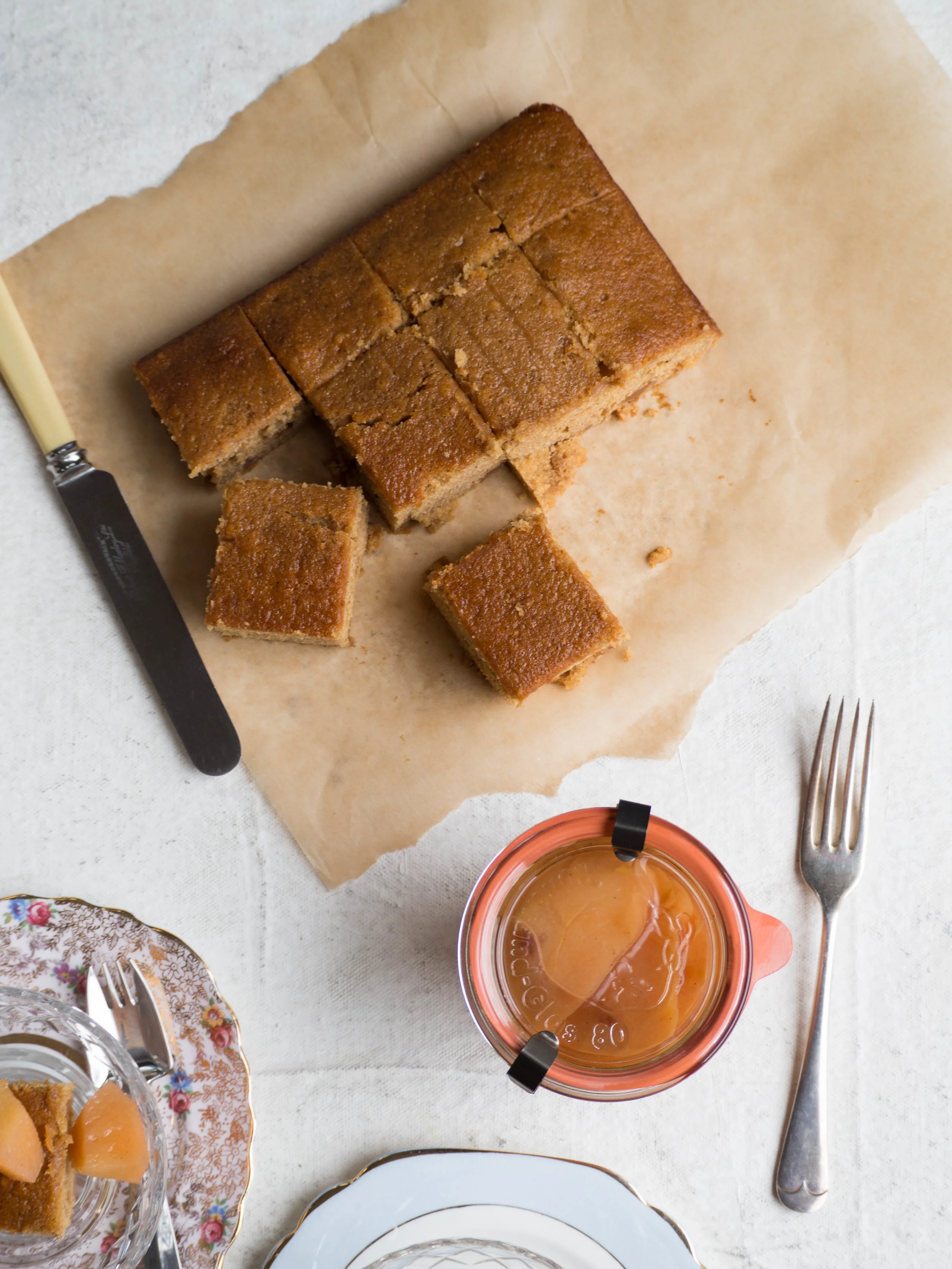
Cut the cake into squares and serve warm or at room temperature with a scoop of quince ice cream and some extra poached quince. 

Ginger & Quince Cake with Quince Ice Cream

Ginger & Quince Cake with Quince Ice Cream

Ginger & Quince Cake with Quince Ice Cream

Ginger & Quince Cake with Quince Ice Cream

References: ‘The Violet Bakery Cookbook’ by Claire Ptak (Ten Speed Press, 2015), pp. 184-5; ‘Annie’s Farmhouse Kitchen’ by Annie Smithers (Hardie Grant Books, 2017), pp.52-3.

Ginger & Quince Cake with Quince Ice Cream

Ginger & Quince Cake with Quince Ice Cream

In Cakes & Slices, Other Desserts, Ice Cream Tags Quince, Ice Cream, Ginger, cake, Dessert
Comment
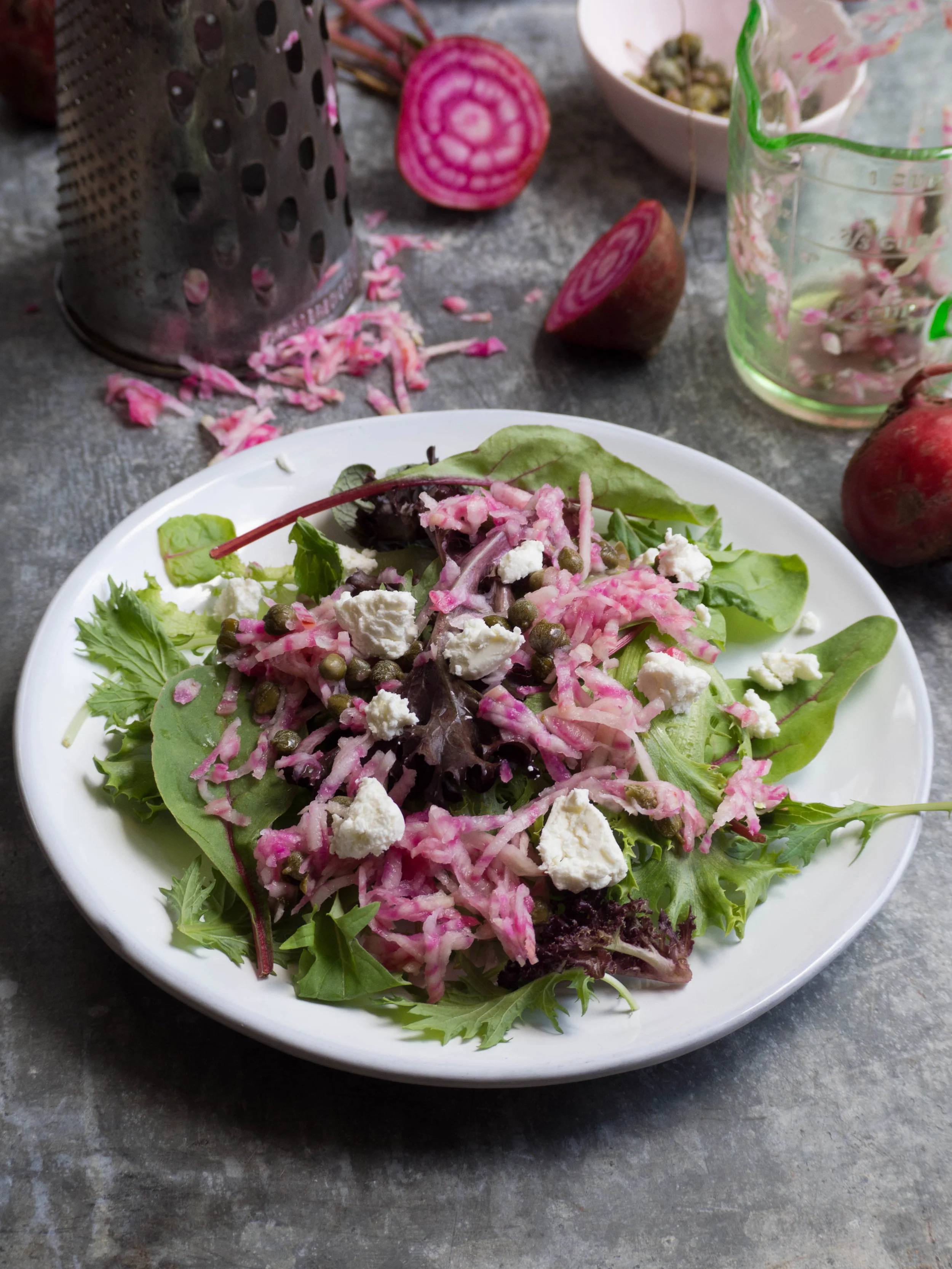
Chioggia Beetroot Salad with Quick Pickled Beetroot

Chioggia Beetroot Salad with Quick Pickled Beetroot

Quick Pickled Beetroot + A Chioggia Beetroot & Goats Cheese Salad

Kath August 9, 2017

I love beetroot. It is one of the few things I have genuinely loved eating all my life. Along with ham and Vegemite, beetroot featured heavily in the meals I ate as a child and continues to do so. Mum would buy the Golden Circle tins of sliced beetroot, which are lightly pickled to preserve them. I probably thought that was the only way you could buy beetroot for a while! 

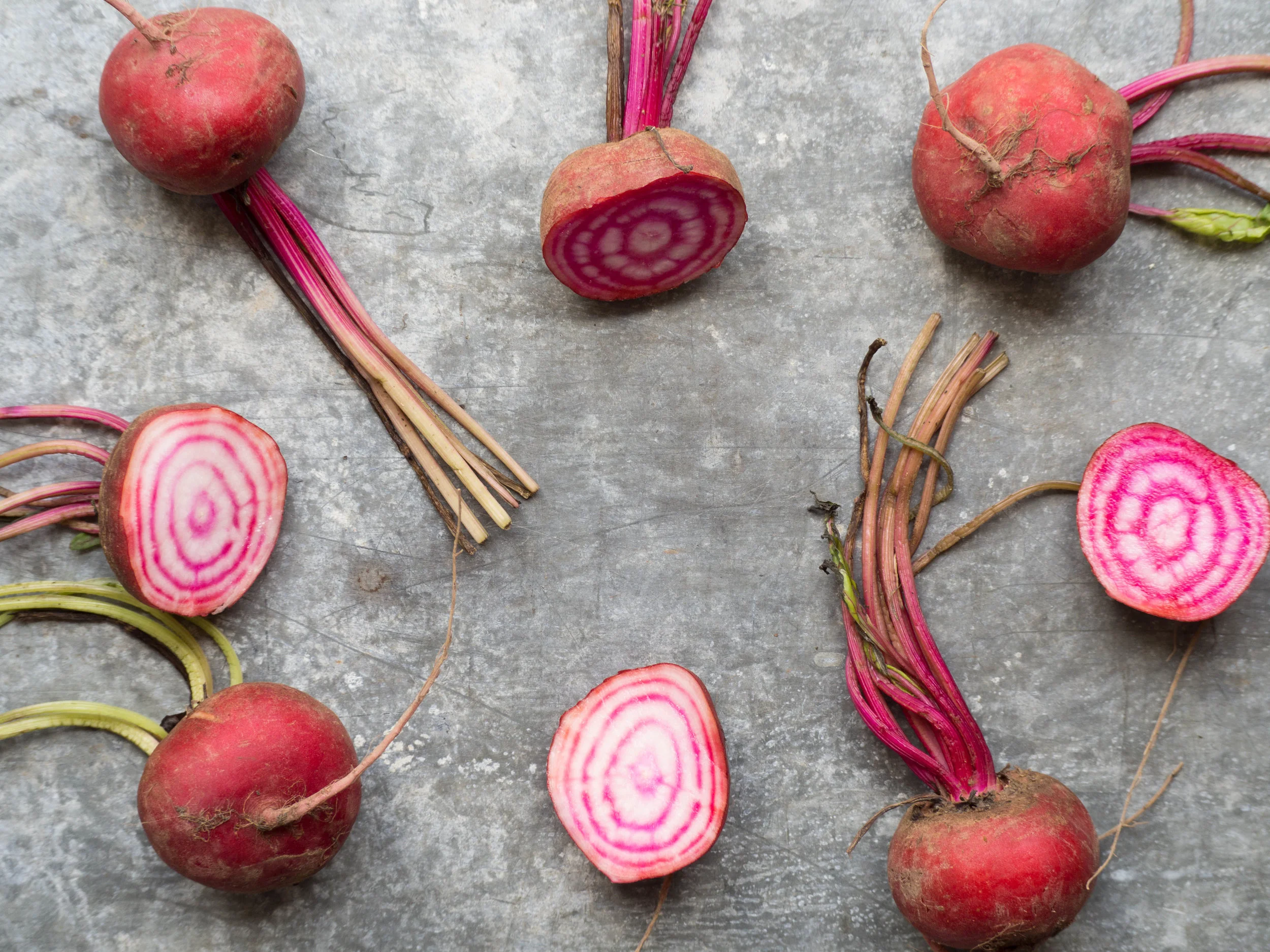
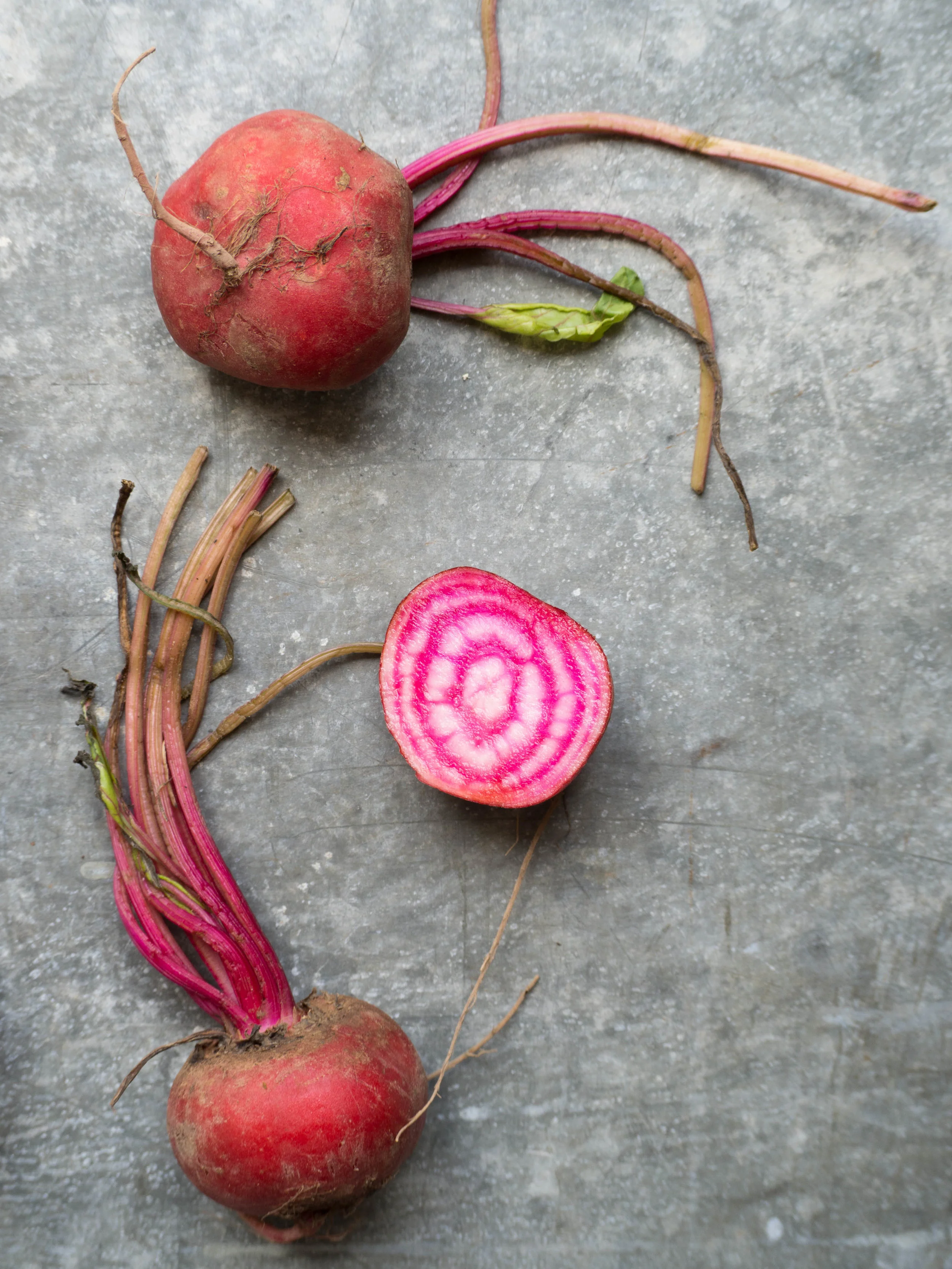
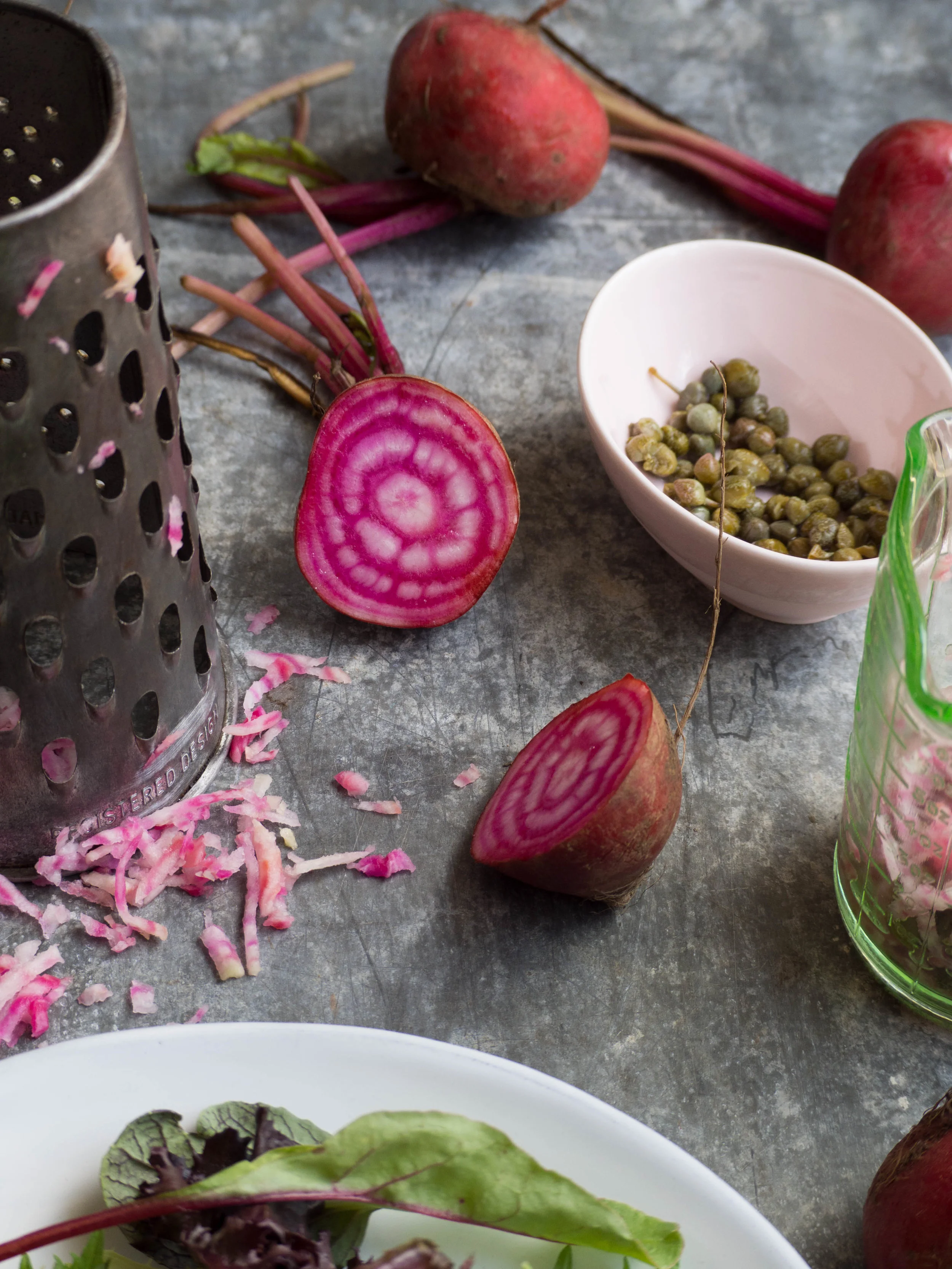
Now I buy fresh beetroot, and the more unusual the variety the better! Currently I have been buying lots of golden beetroot, but the inspiration for this salad was some utterly amazing chioggia or bulls eye beetroot I found at the Carriageworks Christmas Markets last year. The gentleman selling them said that they were the very very last of the season, and probably thought I was a little over enthusiastic about what he was selling! I knew that these beetroot existed, but I had never ever seen them anywhere and thus never had an opportunity to buy any or try them. I bought two bunches, and along with all the other things I had bought that day, carried them home with many ideas running through my mind as to what I could do with them. 

View fullsize Purchases from the Market
View fullsize Peonies from the Market

I started searching online for recipes that specifically used chioggia beetroot, and they all had a common theme - eating them raw as a decoration or in a salad. Many people said that cooking them like you would other beetroots made them lose their distinctive pink and white stripes and turned them an unappetising grey colour. At first I was a little disheartened as I had these amazing beetroots sitting in the fridge, but was still no closer to actually eating them! 

Since this was the first time I had even seen or been able to buy chioggia beetroot, I didn’t want to risk cooking them and finding it was a waste as their colour was what I wanted to retain. So, I decided to pickle them and add to a salad, as many articles and recipes had suggested online. The way I pickle my beetroot for this particular salad is super quick, and only makes what you need for the salad. I liked this method as it was easy to put together a salad for just myself and not use all my prized beetroots at once. I haven’t added any measurements to this recipe, as it is easily adaptable to serving one for lunch or many as a side to a main meal.

Chioggia Beetroot

Chioggia Beetroot

Chioggia Beetroot

Chioggia Beetroot

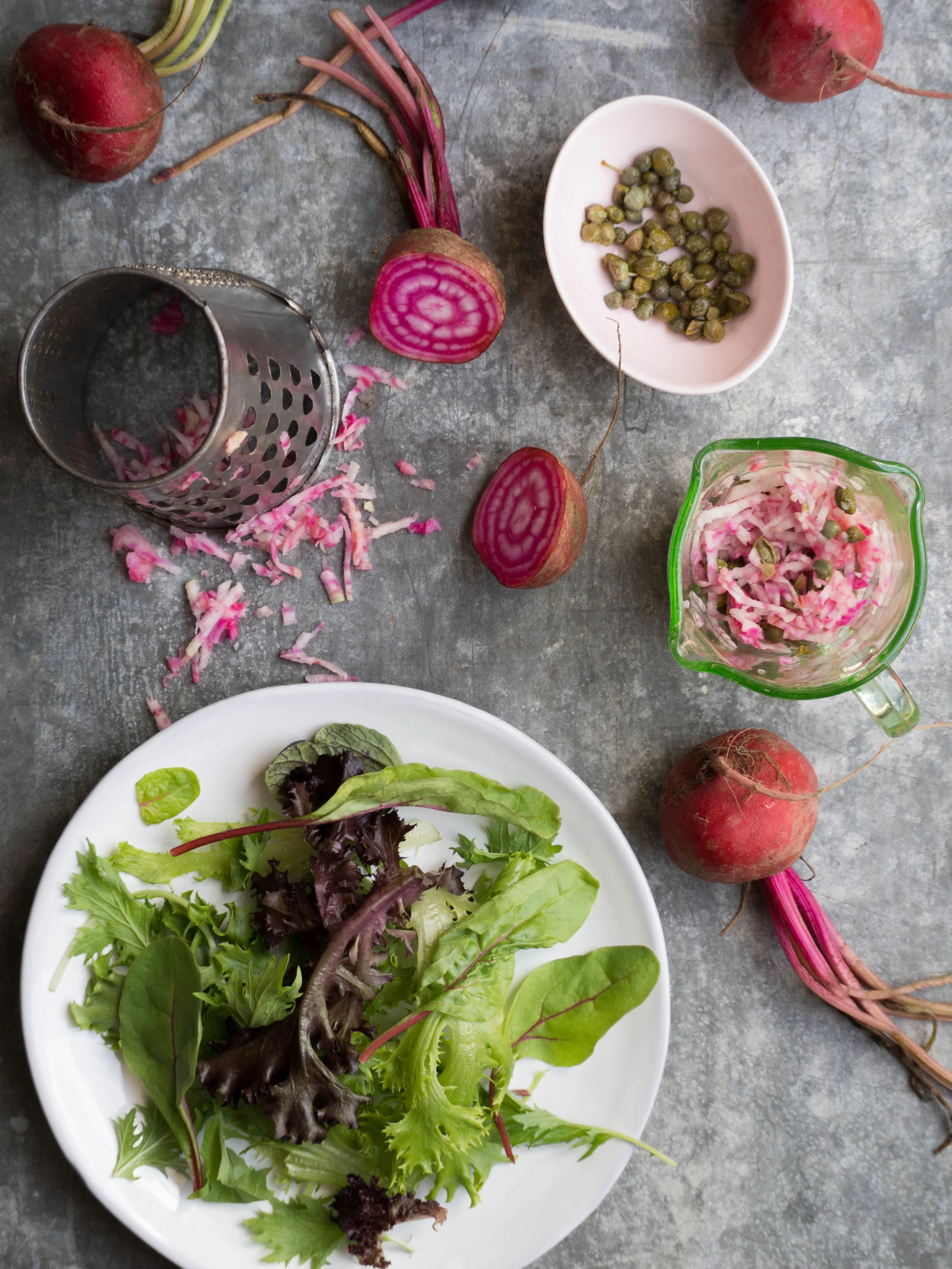
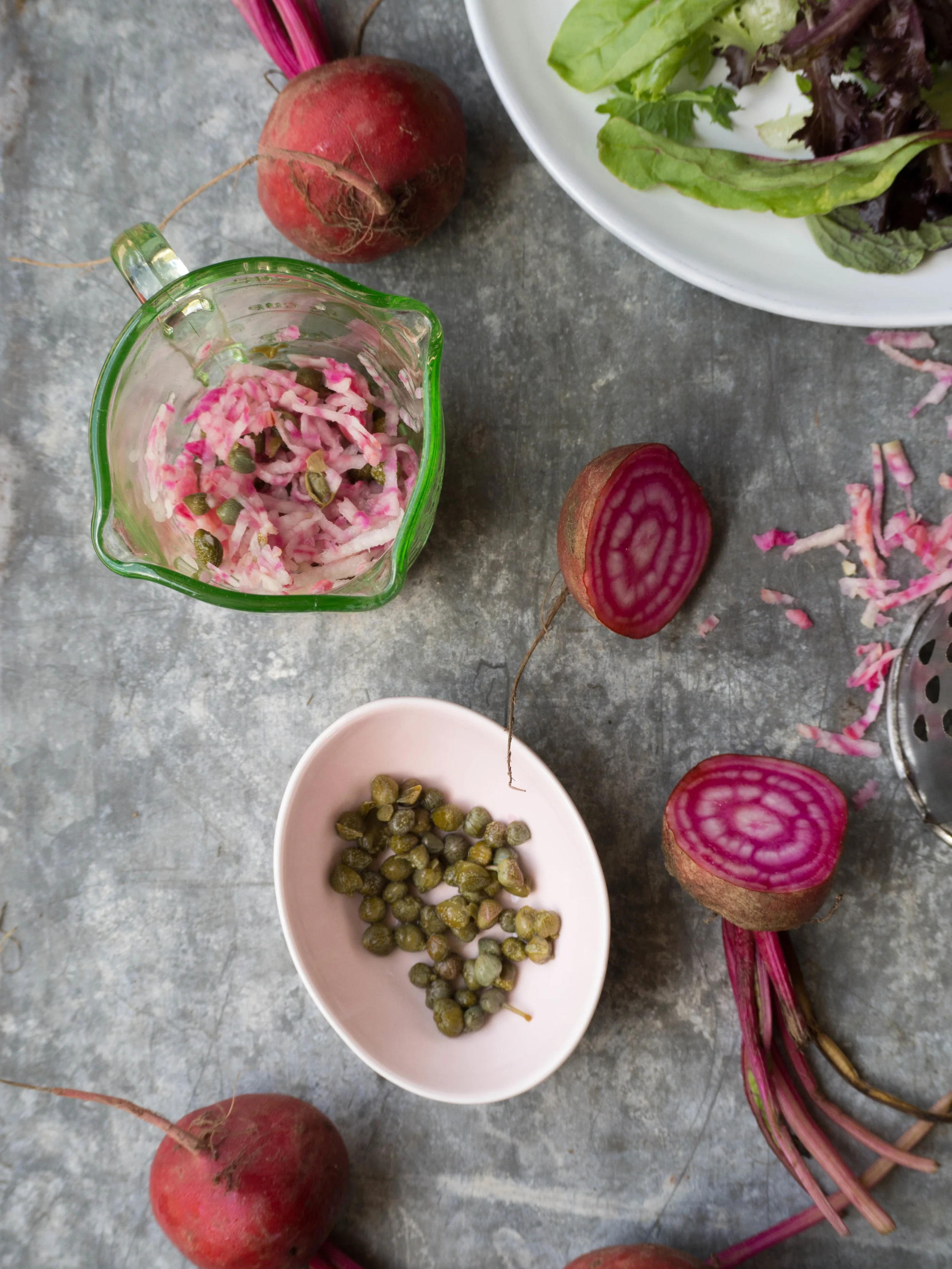
Quick Pickled Chioggia Beetroot

Quick Pickled Chioggia Beetroot

Quick Pickled Chioggia Beetroot

Quick Pickled Chioggia Beetroot

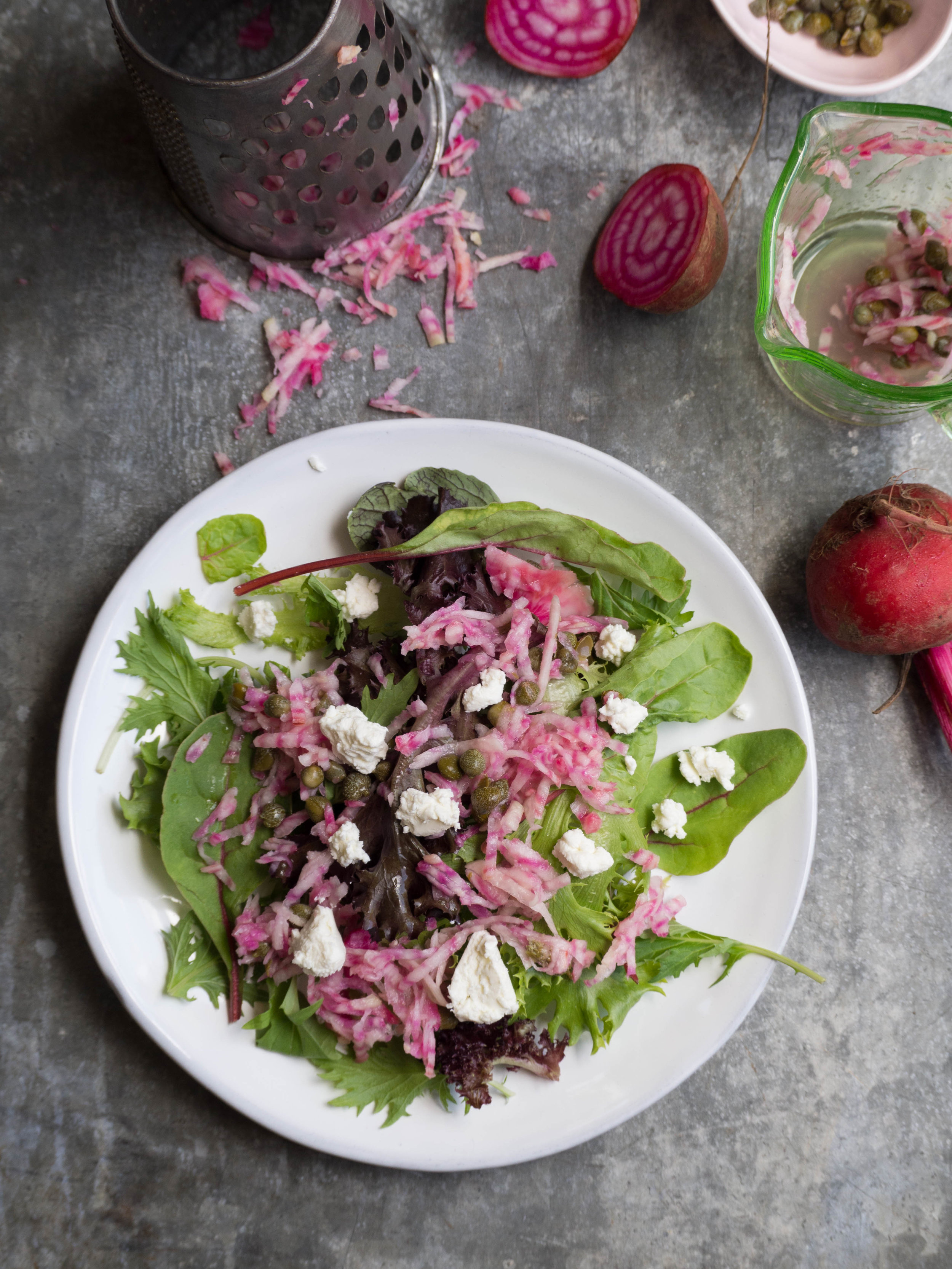
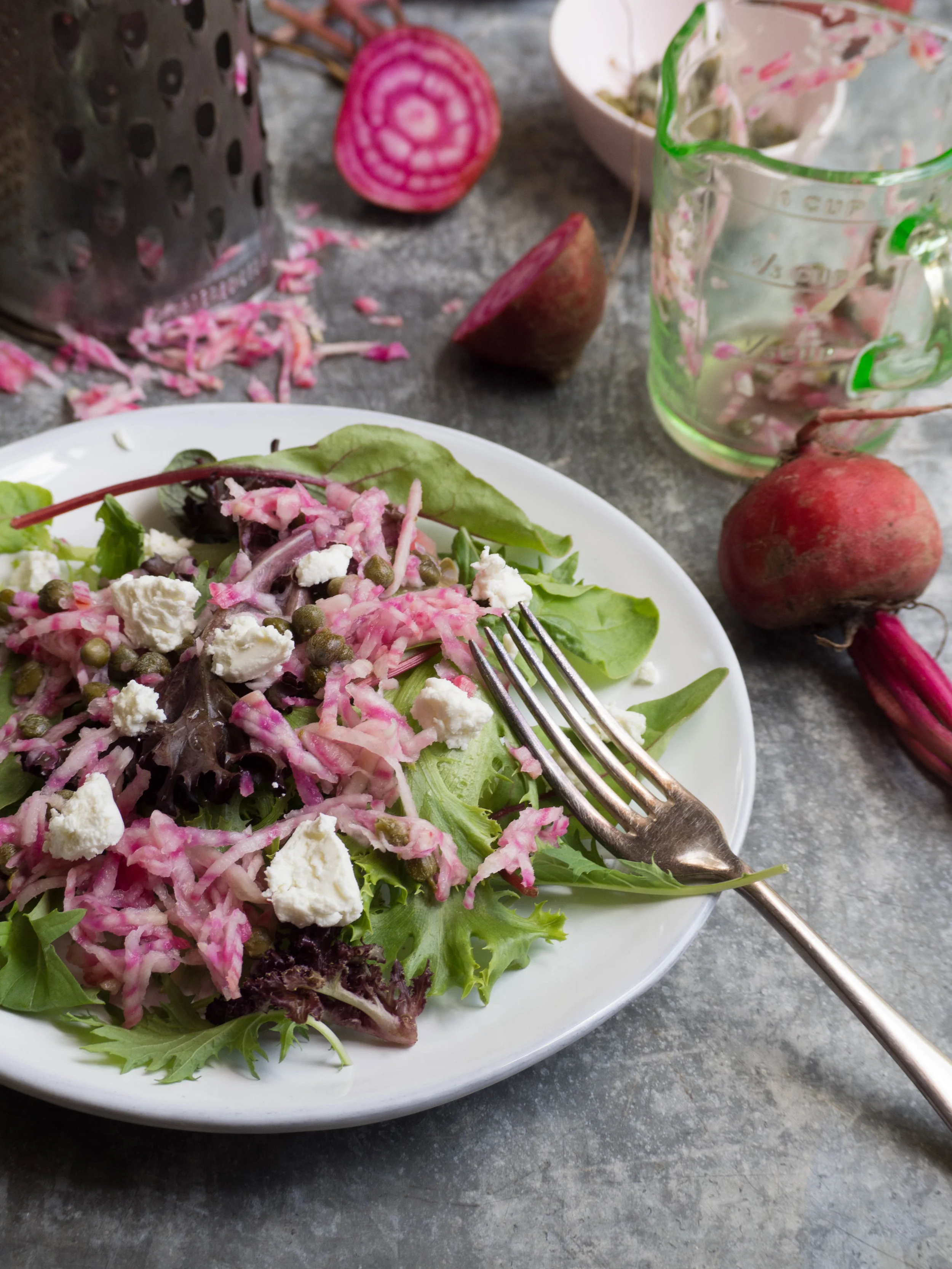
Chioggia Beetroot & Goats Cheese Salad

Ingredients:

chioggia beetroot, about 1/2-1 beetroot per person

white wine vinegar

baby capers in vinegar

salad leaves 

goats cheese


Method: 

Trim leaves and stems from beetroot, and wash throughly. Peel beetroot, discarding the skins and then grate. Place the grated beetroot in a bowl and add 1/2-1tsp of capers (per person), there is no need to drain the capers of the vinegar. 

Lightly cover the grated beetroot with either some of the vinegar from the capers and/or some of the white vinegar. You don’t want the beetroot to be swimming in the vinegar, just enough so all the beetroot can lightly pickle. Leave to pickle while preparing the rest of the salad.

Place salad leaves in salad bowl if serving many, or an individual plate if making for one. 

Crumble the goats cheese over the salad leaves, using as much or as little as your personal tastes dictate. 

Sprinkle the pickled beetroot and capers over the salad, using some of the pickling liquid as a light dressing if desired.

Chioggia Beetroot

Chioggia Beetroot

Chioggia Beetroot Salad with Quick Pickled Beetroot

Chioggia Beetroot Salad with Quick Pickled Beetroot

Chioggia Beetroot Salad with Quick Pickled Beetroot

Chioggia Beetroot Salad with Quick Pickled Beetroot

In Savoury Dishes/Meals Tags Chioggia Beetroot, Beetroot, Goats Cheese, Salad, Pickling
Comment
Duck Egg Sponge Cake

Duck Egg Sponge Cake

Duck Egg Sponge

Kath August 2, 2017

Over the last few years, I have been on a somewhat unofficial sometimes unintentional quest to find the best sponge cake recipe. You’d think that a cake with such few ingredients would be the same all round, but they never are! Corn flour or all plain flour, or self raising flour, custard powder, melted butter or no butter? Each time I find a new recipe, it becomes my new favourite until months or years later, I stumble across a new one. 

This particular recipe, was right under my nose the whole time, and it is by far the best I have found during my quest! It is from the book ‘Local is Lovely’, which is a small unassuming book, that is absolutely jam packed full of really good recipes. And when I mean jam packed I mean it! Every time I take a look through, I seem to add more sticky notes to another page for another recipe I want to make. 

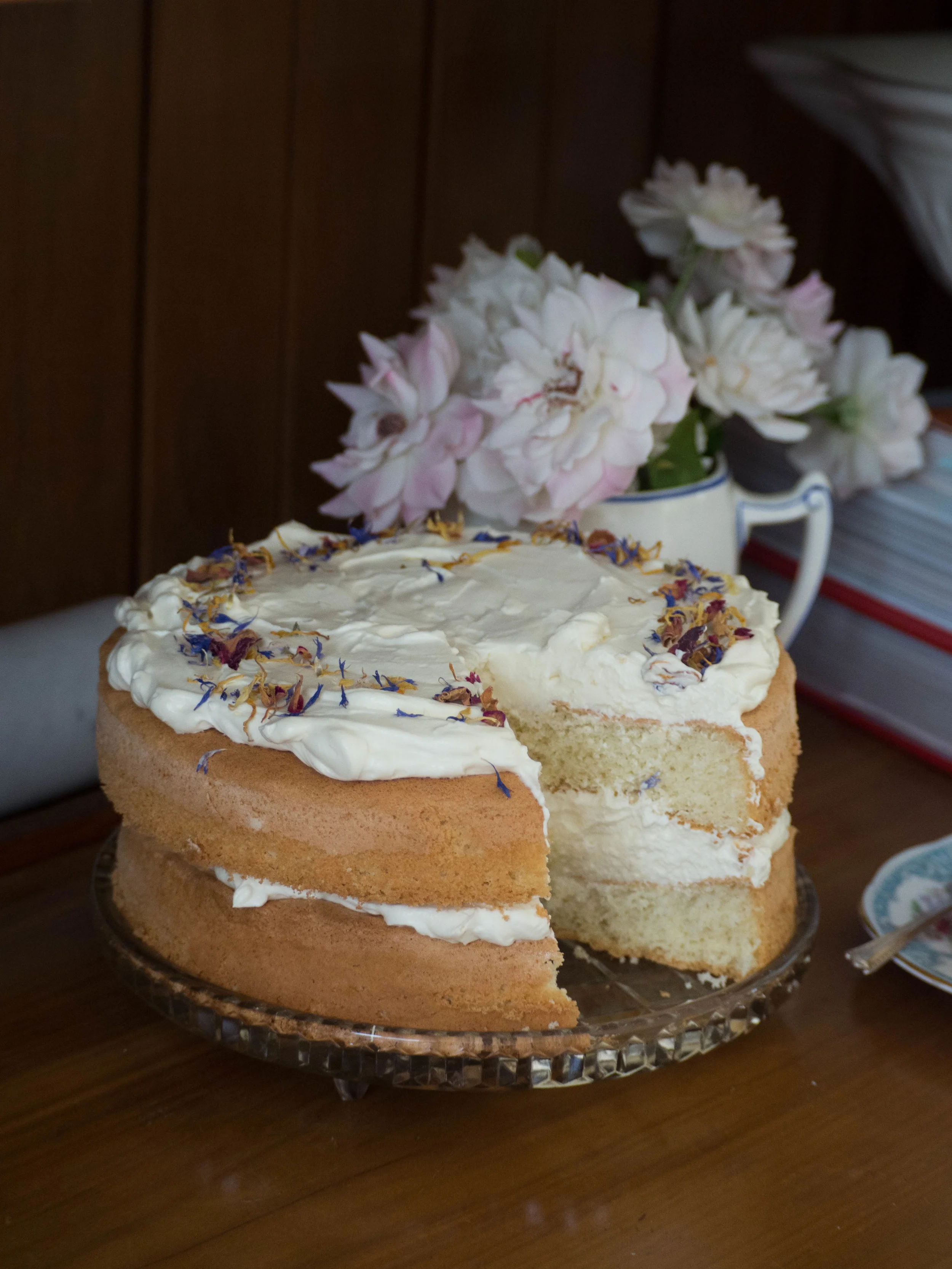
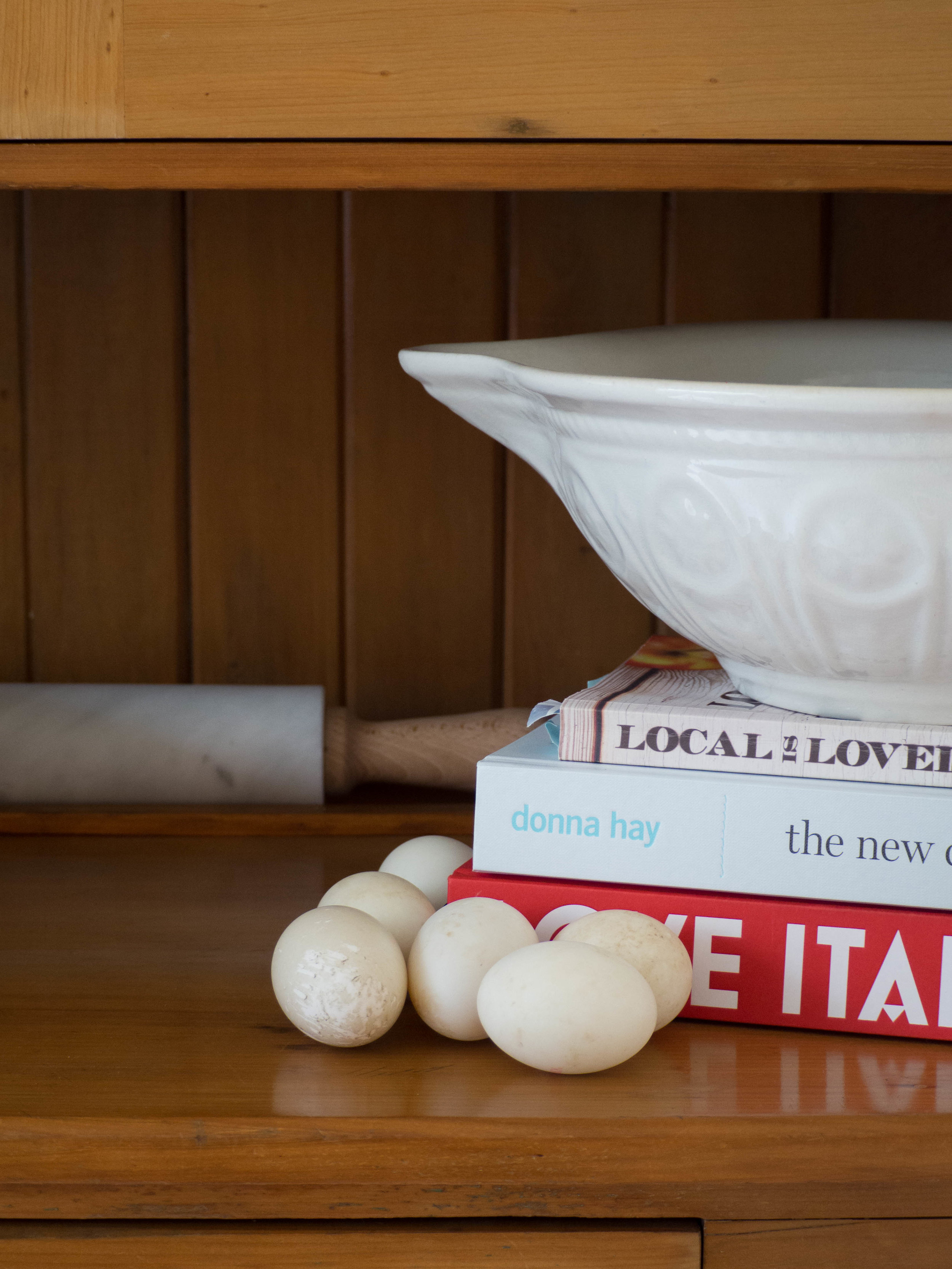
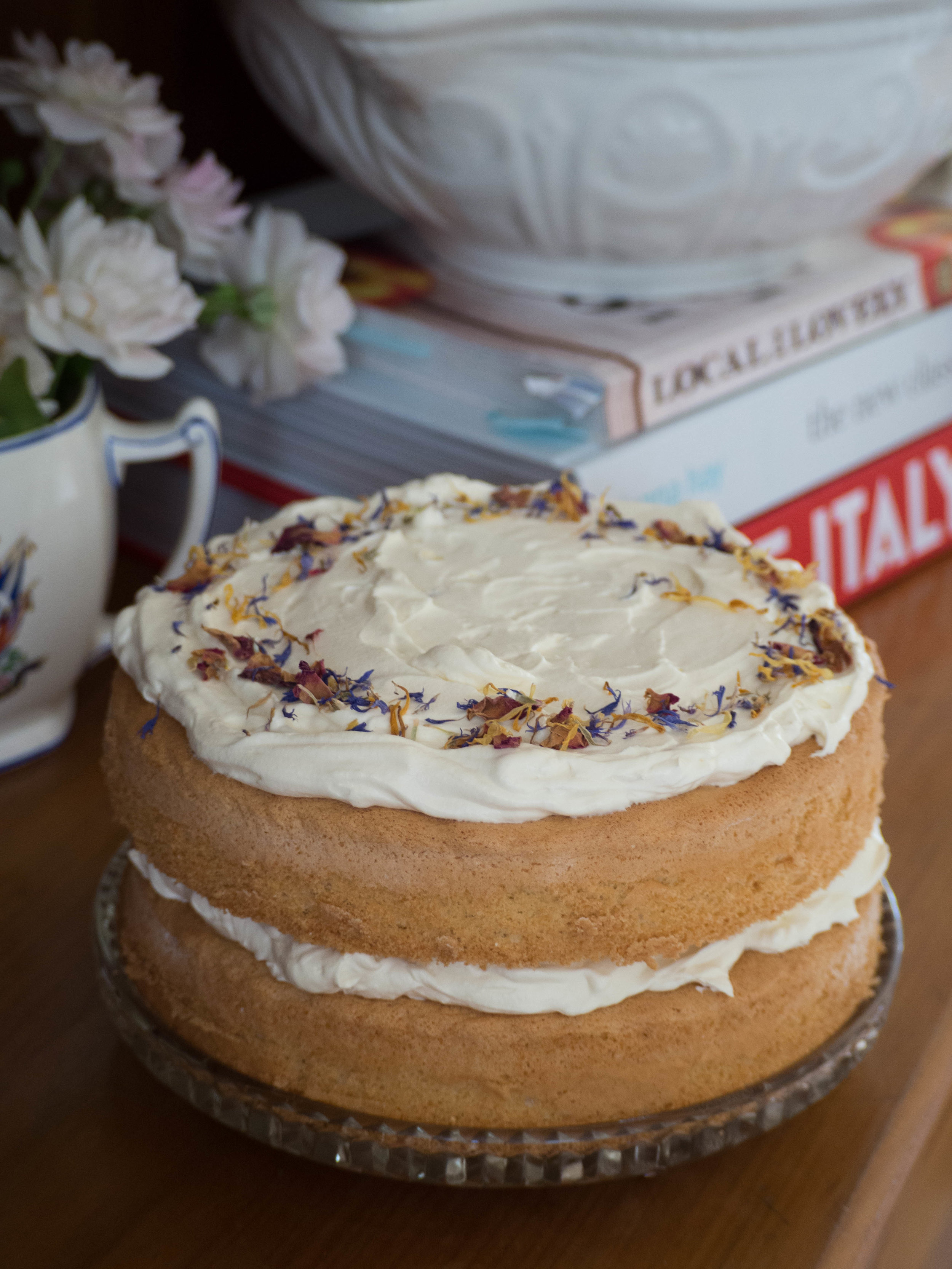
On this particular occasion I had bought some duck eggs, which was super exciting, but I wasn’t sure what to make with them. I had heard that duck eggs made good sponge cakes so I went looking for a recipe, and sure enough ‘Local is Lovely’ delivered the goods (again!). It turned out to be the nicest sponge cake ever, so now I can definitively say duck eggs do make really good sponges! The honey added to the cream is also a simple yet utterly amazing idea that gives the whole cake a subtle sweetness that was so incredibly more-ish. 

I now keep an eye out for duck eggs, just in case I am given the opportunity to make this cake again. If you can’t find any, use five larger chicken eggs. 

Duck Eggs

Duck Eggs

Duck Egg Sponge Cake

Duck Egg Sponge Cake

Duck Egg Sponge Cake

Duck Egg Sponge Cake

Duck Egg Sponge Cake

Ingredients: 

x4 duck eggs

140g caster sugar or golden caster sugar 

160g plain flour, plus extra for the tin

2 tsp baking powder 

300ml pouring cream

90 ml honey

dried edible flowers, to decorate (optional)

butter, to grease the tin


Method: 

If your duck eggs have been in the fridge, take them out and allow them to come down to room temperature. 

Preheat oven to 180 degrees Celsius, and butter and flour two 20 cm loose bottomed cake tins. 

In the bowl of a stand mixer, add the eggs and sugar. I suggest cracking each duck egg into a glass and pouring it into the bowl. Duck eggs have a harder shell than chicken eggs and I found that more of the shell shattered away (and into the egg itself) because a little more force was needed to crack them open. This way it is easier to remove any stray bits of shell before adding the eggs to the bowl. 

Whisk the eggs and sugar together for about 10 minutes, on medium to high speed. The mixture will triple in size and become pale and fluffy. 

While the eggs are whisking, measure the flour and baking powder into a separate bowl and whisk together to remove any lumps. Carefully add the flour and baking powder to the whisked eggs, gently and quickly folding it into the eggs with a large metal spoon.

Divide the mixture between the two prepared tins, and bake for 15-20 minutes. The cakes will be golden in colour and spring back when lightly touched. 

Leave the cakes to cool in their tins for a couple of minutes. Place a sheet of baking paper on a cooling rack, and remove each cake from their tins on to the paper. This will prevent the cakes sticking to the cooling racks. Alternatively, you can leave the baking paper that is already on the base of each cake, and place them straight on the racks. 

Once the cakes have cooled (this shouldn’t take too long), prepare the cream filling. Whip the cream until it has thickened and soft peaks are forming. Add the honey and whisk until combined. Place one of the cakes on a cake stand or serving plate, and top with 1/2 - 3/4 of the cream. Place the second sponge on top and finish with the remaining cream. Sprinkle dried edible flowers over the top of the cake to decorate. 

Duck Egg Sponge Cake

Duck Egg Sponge Cake

Duck Egg Sponge Cake

Duck Egg Sponge Cake

Duck Egg Sponge Cake

Duck Egg Sponge Cake

Reference: Local is Lovely by Sophie Hansen (Hachette Australia, 2014), p.50.

Duck Egg Sponge Cake

Duck Egg Sponge Cake

Duck Egg Sponge Cake

Duck Egg Sponge Cake

In Cakes & Slices Tags Duck Eggs, Sponge, Local is Lovely
8 Comments
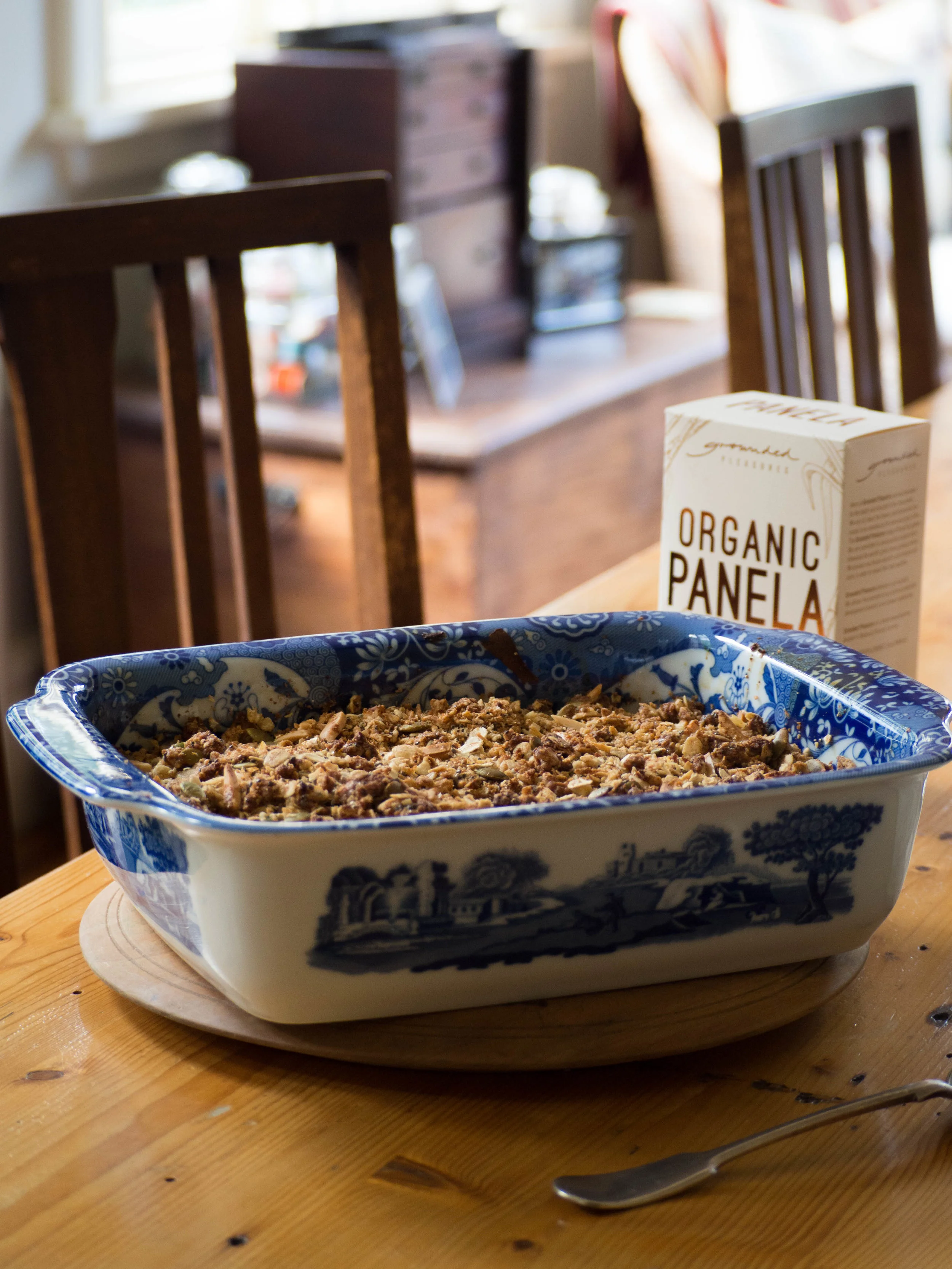
Muesli Breakfast Crumble

Muesli Breakfast Crumble

Muesli Breakfast Crumble

Kath July 25, 2017

When I’m working, and there are early mornings, long days and lots of travel ahead, the last thing I feel like doing when I wake up is make breakfast. However, breakfast is exactly what I need to start those kinds of work days off on the right foot. I tend to opt for quick things like toast, though they don’t keep me full for very long. Every so often however, I find something for breakfast that I really like, and can be made in advance and quickly re-heated and eaten before the work day begins. 

A couple of years ago I started making a double batch of these pancakes on the weekend, then kept enough for two per day in the fridge for the working week, or freeze them to defrost in the microwave each morning. While reheated pancakes don’t have the same ring to them as freshly made, I found it so much easier to wake up each morning knowing I had something nice to eat. I made sure I had some nice maple syrup, honey or fresh honeycomb, berries or other fruit and yoghurt to eat with them and it made the start to the day so much easier. 

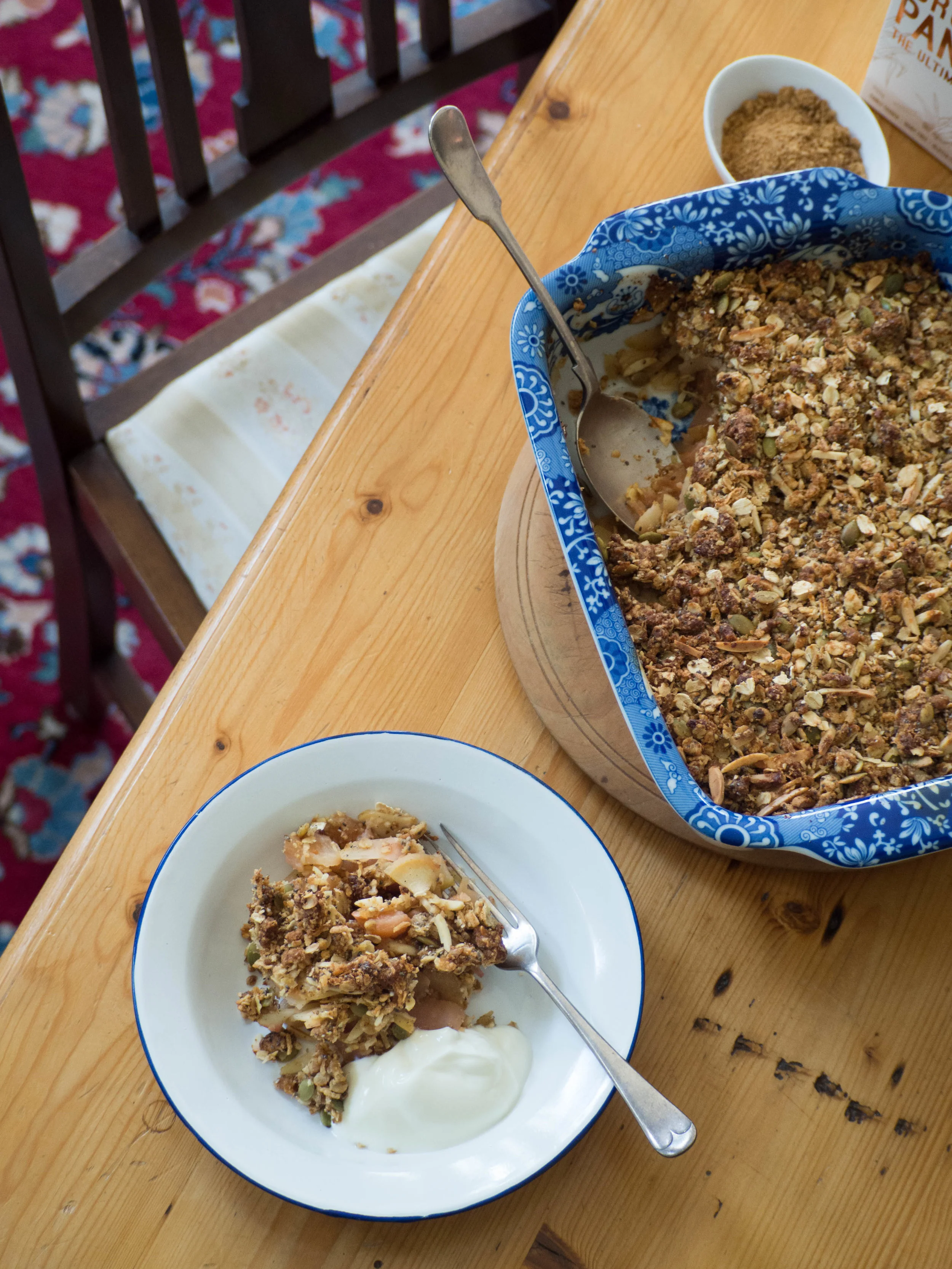
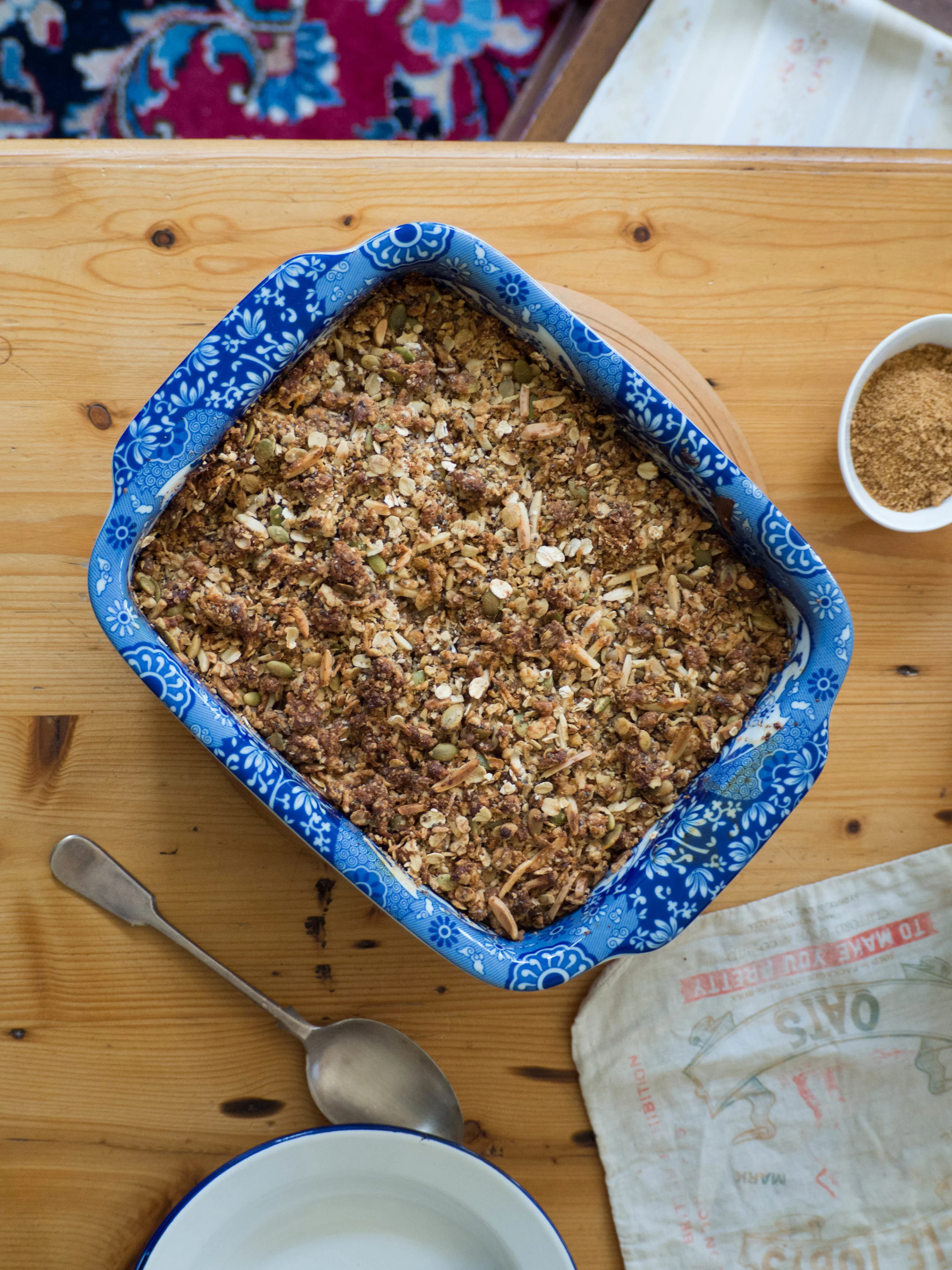
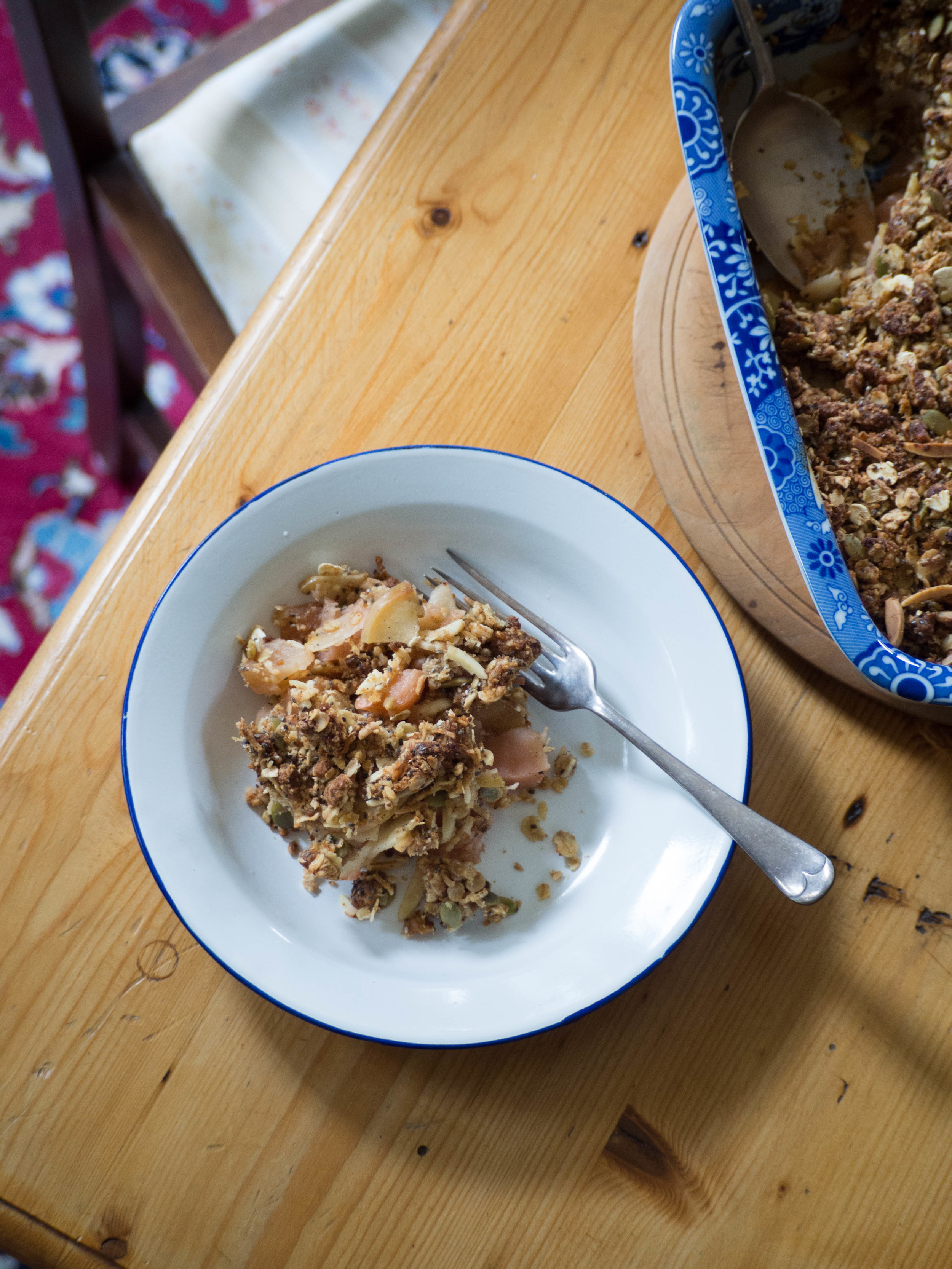
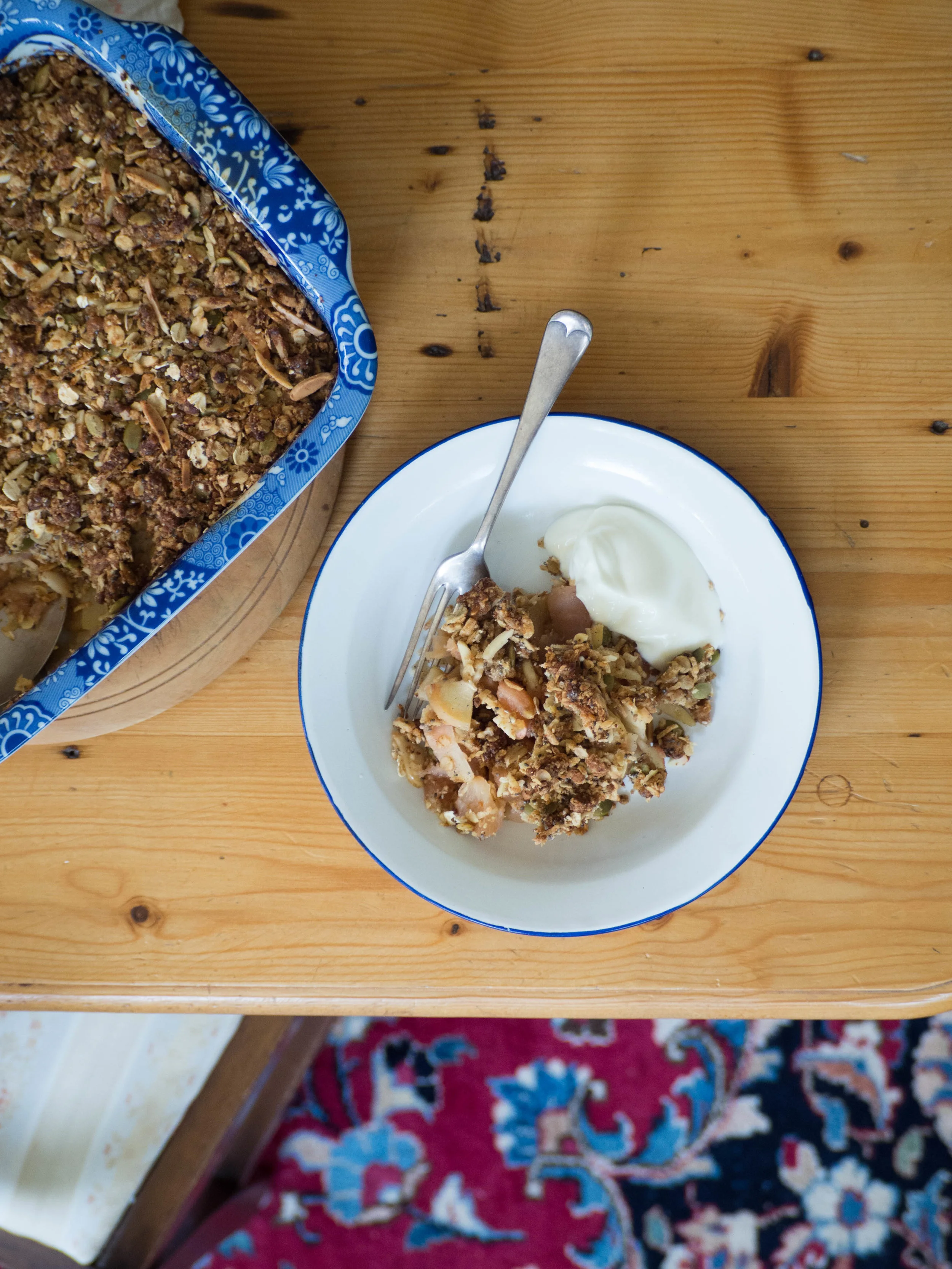
I have since found a few more breakfasts that can be made in advance, including the crumpets in this recent post, and this Muesli Breakfast Crumble. The crumble is inspired by the dessert crumble I made last year, which I loved, and some homemade muesli I was gifted from a friend at work who later gave me the recipe. I have used finely sliced Pink Lady apples and poached quince as my fruit filling for this Breakfast Crumble, however almost any fruit combination will work. Stone fruit and berries would be amazing in Summer, and rhubarb in Winter. The quantities of the fruit don’t matter so much, as long as they fill your baking dish with enough room for the crumble topping to sit on top. 

What are your tips for easy and tasty breakfasts during the work week? 

Also just a little note to say I'm going to be putting together a (mostly) weekly newsletter, filled with recipes, tips, tricks and recommendations you won't find here on the blog! I'm hoping to share even more exclusive content via the newsletter soon, so click here to sign up! 

Muesli Breakfast Crumble

Muesli Breakfast Crumble

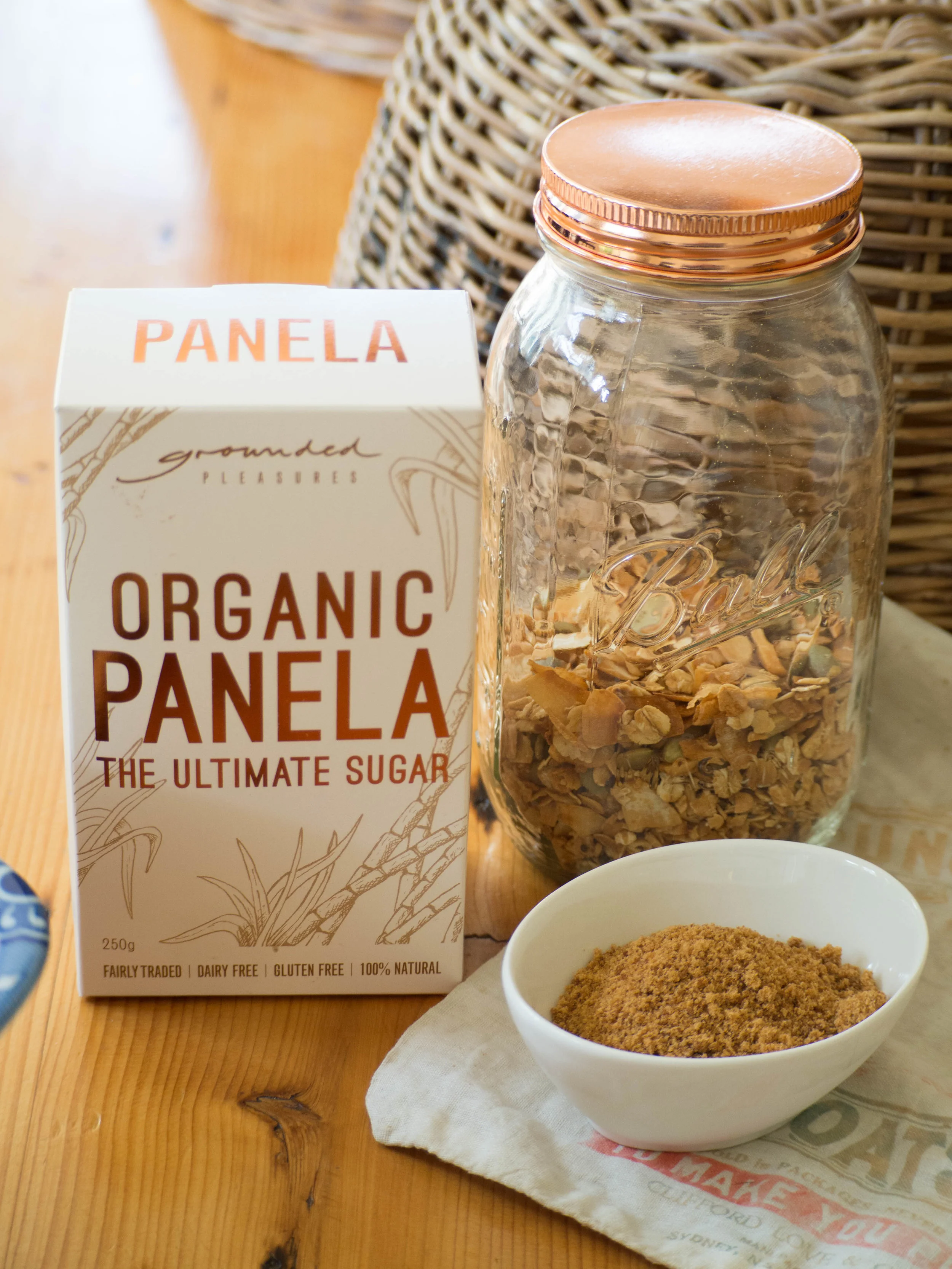
Grounded Pleasures Organic Panela Sugar - used in crumble mixture

Grounded Pleasures Organic Panela Sugar - used in crumble mixture

Muesli Breakfast Crumble

Muesli Breakfast Crumble

Muesli Breakfast Crumble

Ingredients: 

x3 small apples, I prefer Pink Lady, finely sliced then roughly chopped

1.5-2 large poached quinces, roughly chopped

2 tbsp quince poaching liquid

1 Grounded Pleasures Vanilla Bean, seeds scraped

60g wholemeal plain flour

60g oats

1/2 tsp cinnamon

50g margarine or softened unsalted butter

20g sunflower kernels

15g chia seeds

75g Grounded Pleasures Organic Panela Sugar

25g pepitas

30g slivered almonds 

Greek yoghurt, to serve


Method: 

Pre-heat oven to 180 degrees Celsius. 

Mix the apple, quince, poaching liquid and vanilla bean seeds in a baking dish (interior dimensions approx. 24 x 19.5 x 6.5cm), then set aside. 

In a medium/large bowl combine the flour, oats, cinnamon, margarine, sunflower kernels, chia seeds, Panela sugar, pepitas and almonds, until they are well combined and the margarine has evenly dispersed. 

Spoon the muesli crumble mixture over the apples and quince in the baking dish, ensuring the entire surface of the dish is evenly covered. 

Bake in the preheated oven for 30 minutes, or until the crumble topping is golden. Serve warm from the oven with Greek yoghurt or reheat portions for easy breakfasts later on. 

Muesli Breakfast Crumble

Muesli Breakfast Crumble

Muesli Breakfast Crumble

Muesli Breakfast Crumble

Muesli Breakfast Crumble

Muesli Breakfast Crumble

Thanks to Grounded Pleasures for sponsoring this post and providing the yummy Panela Sugar & Vanilla Beans! 

In Breakfast Tags Crumble, Muesli, Breakfast, Grounded Pleasures, Sponsored Posts, Panela Sugar
Comment
Bergamot Loaf Cake

Bergamot Loaf Cake

Bergamot Loaf Cake

Kath July 20, 2017

If you’ve been following me on Instagram lately, you may have noticed my slight obsession with bergamots. I seem to be drawn to interesting and lesser known fruits, and bergamots are no exception. Bergamot is a citrus, and is best known for being the flavour in Earl Grey tea. It has a slight floral flavour, which in my opinion not only makes it slightly sweeter and less sour than other citrus, but also it’s best quality. As evidenced by how many times I have used rose in my cooking, it is no surprise that I like the floral notes of bergamot. It may be a little much for some, I guess it depends on what you like, but as far as I’m concerned, it is now my favourite citrus. 

This does however pose a problem. Bergamot being a lesser known variety of citrus, are therefore not grown and sold nearly as readily as other citrus varieties. To the point where I have never seen bergamots being sold anywhere here in Sydney (if you know of anywhere please let me know!). 

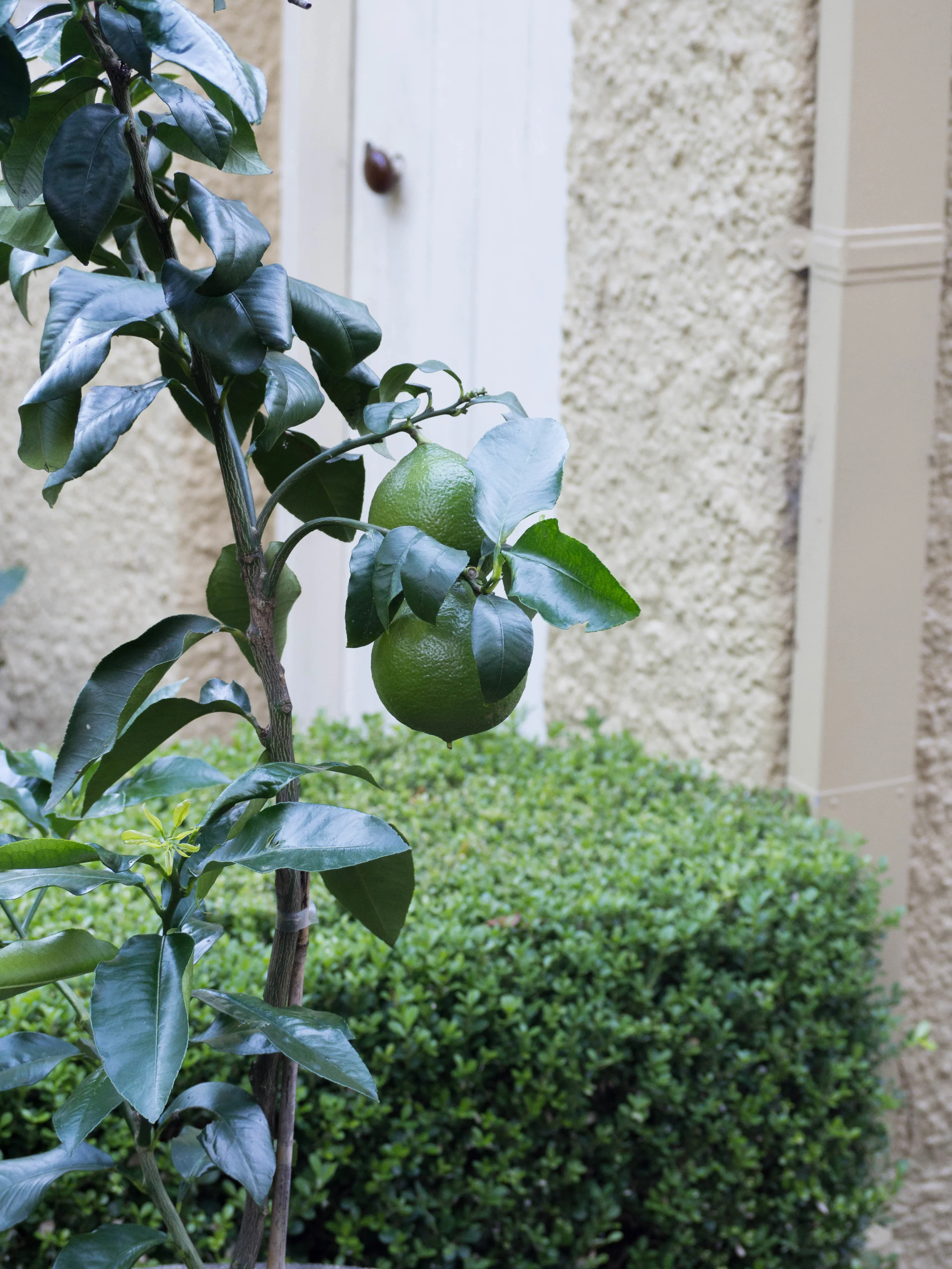
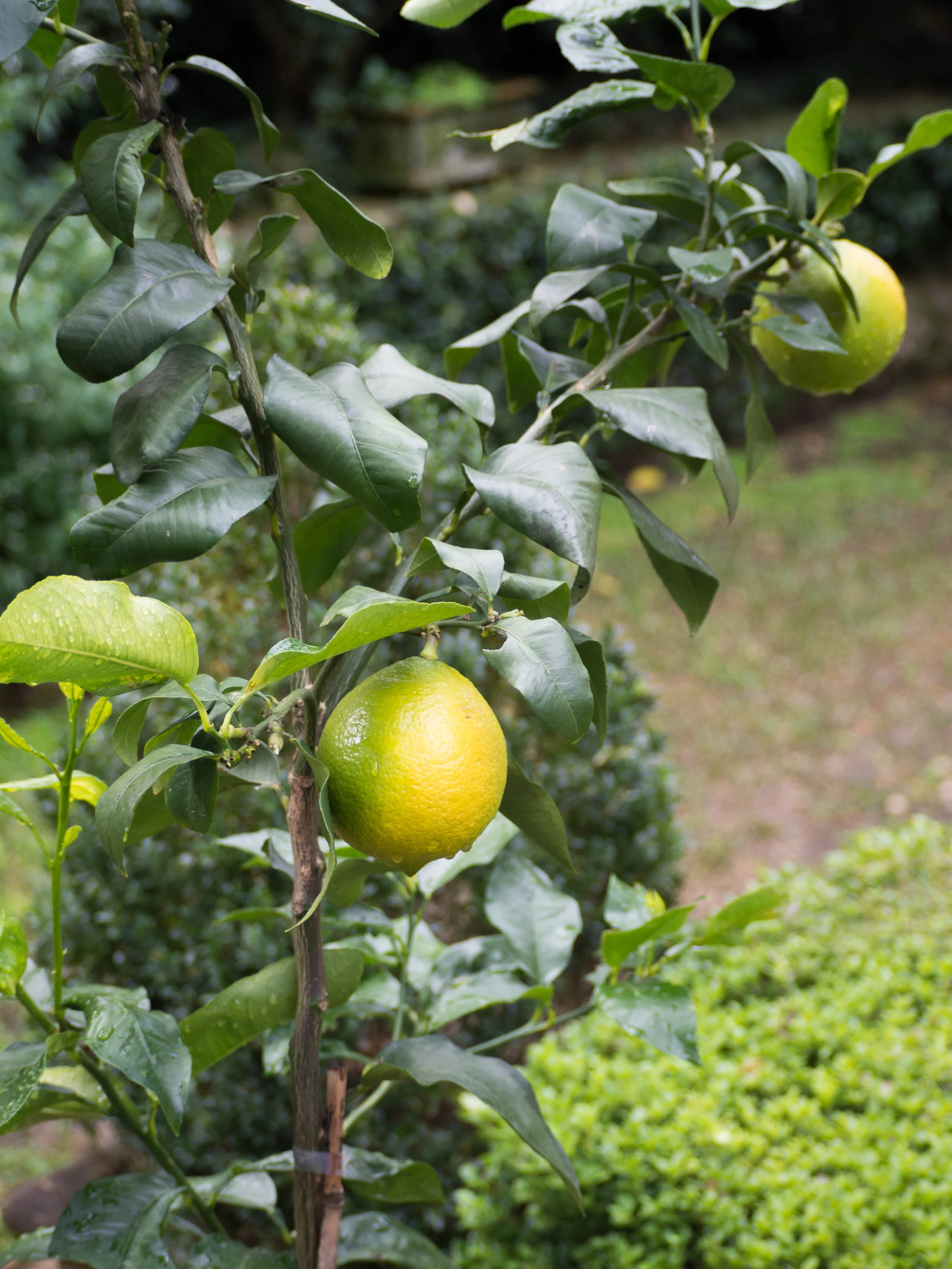
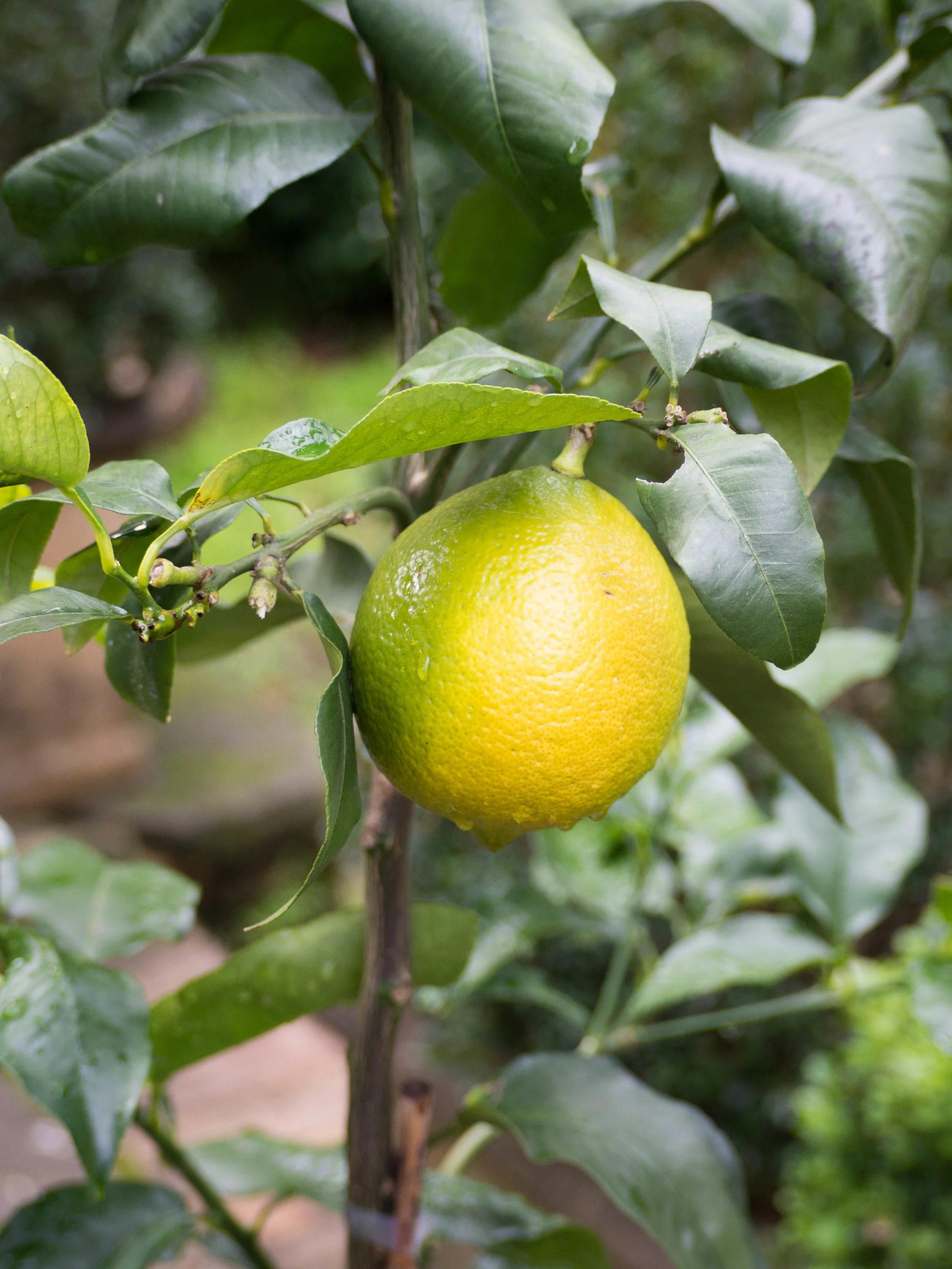
As I have mentioned before, last year we were able to buy and plant a bergamot tree. I watched the three bergamots growing on the tree for months, hoping they would survive, and be as tasty as I hoped. Finally last month, they had turned from a bright green, to yellow and were ready to be picked. I deliberated for quite a while about what to make with them, with only three bergamots for the whole season, I needed to make a good choice. 

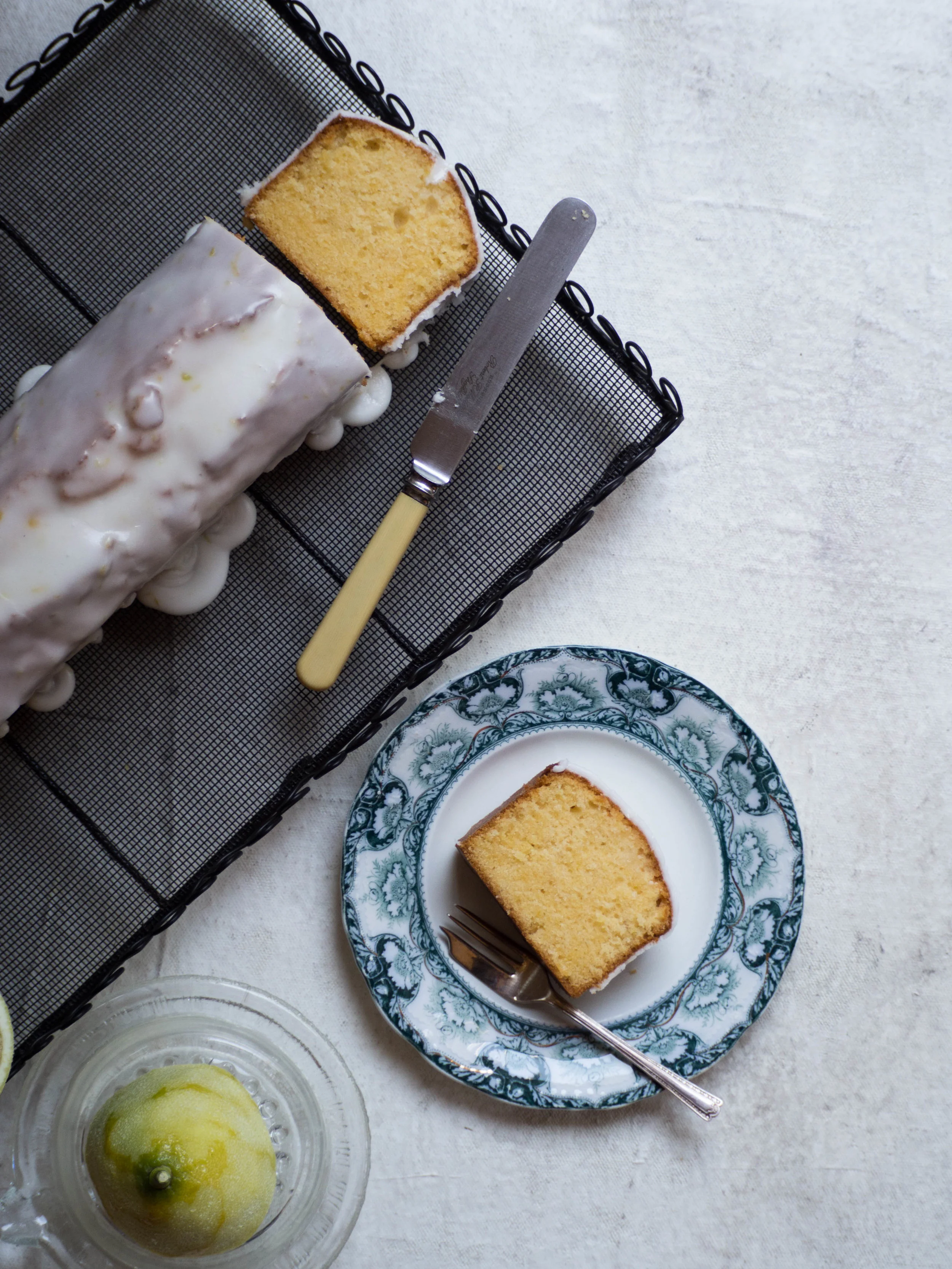
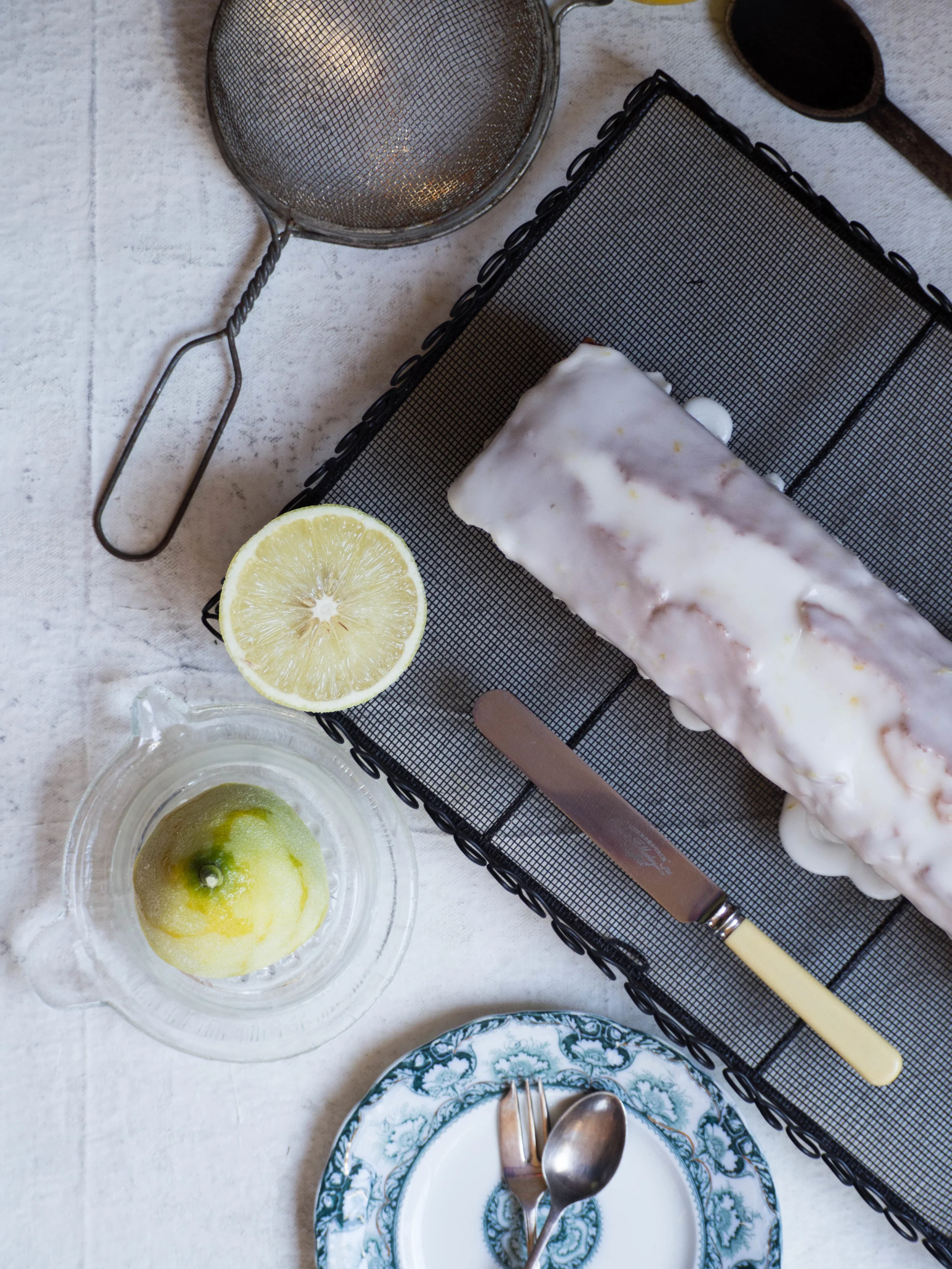
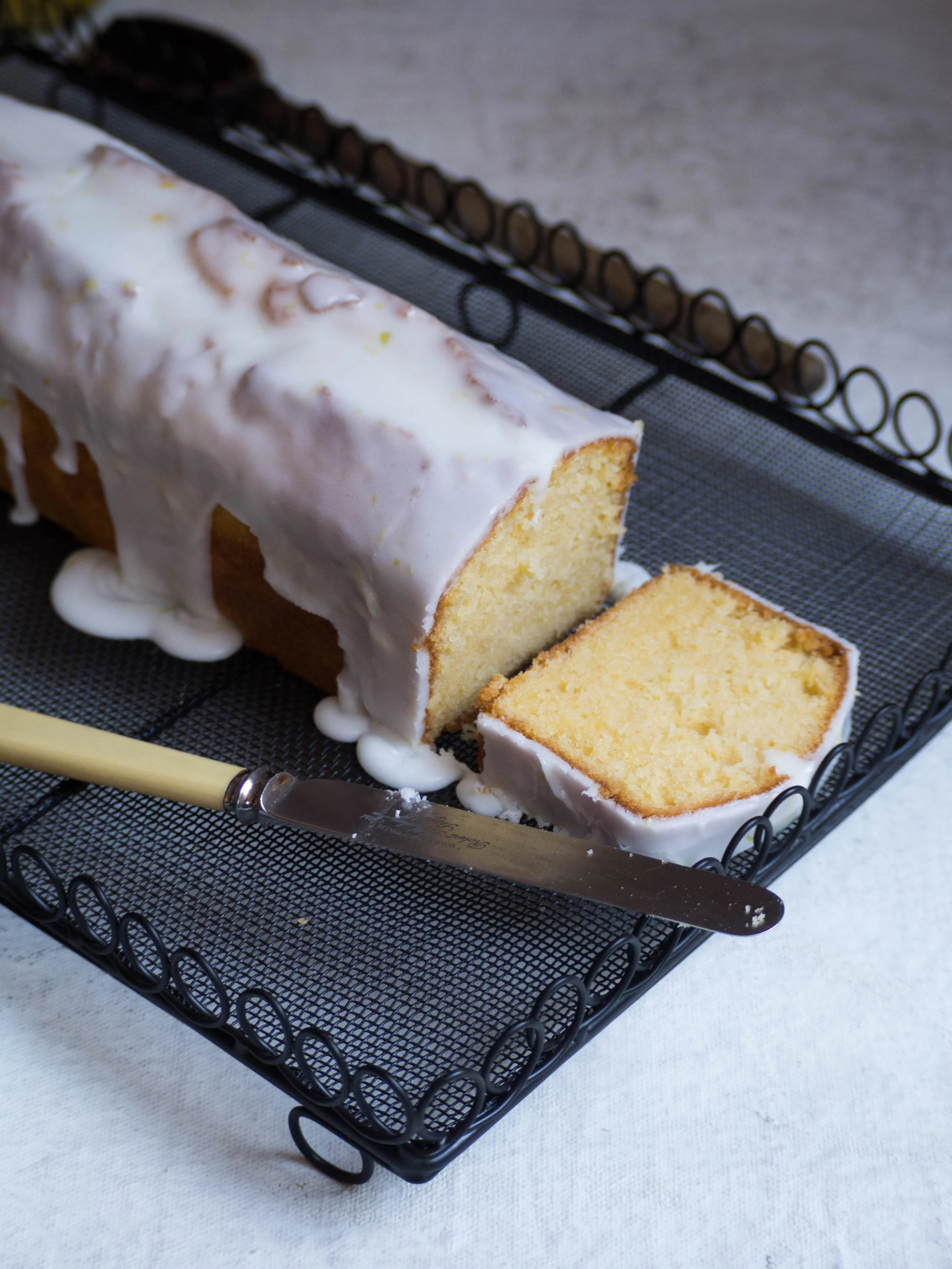
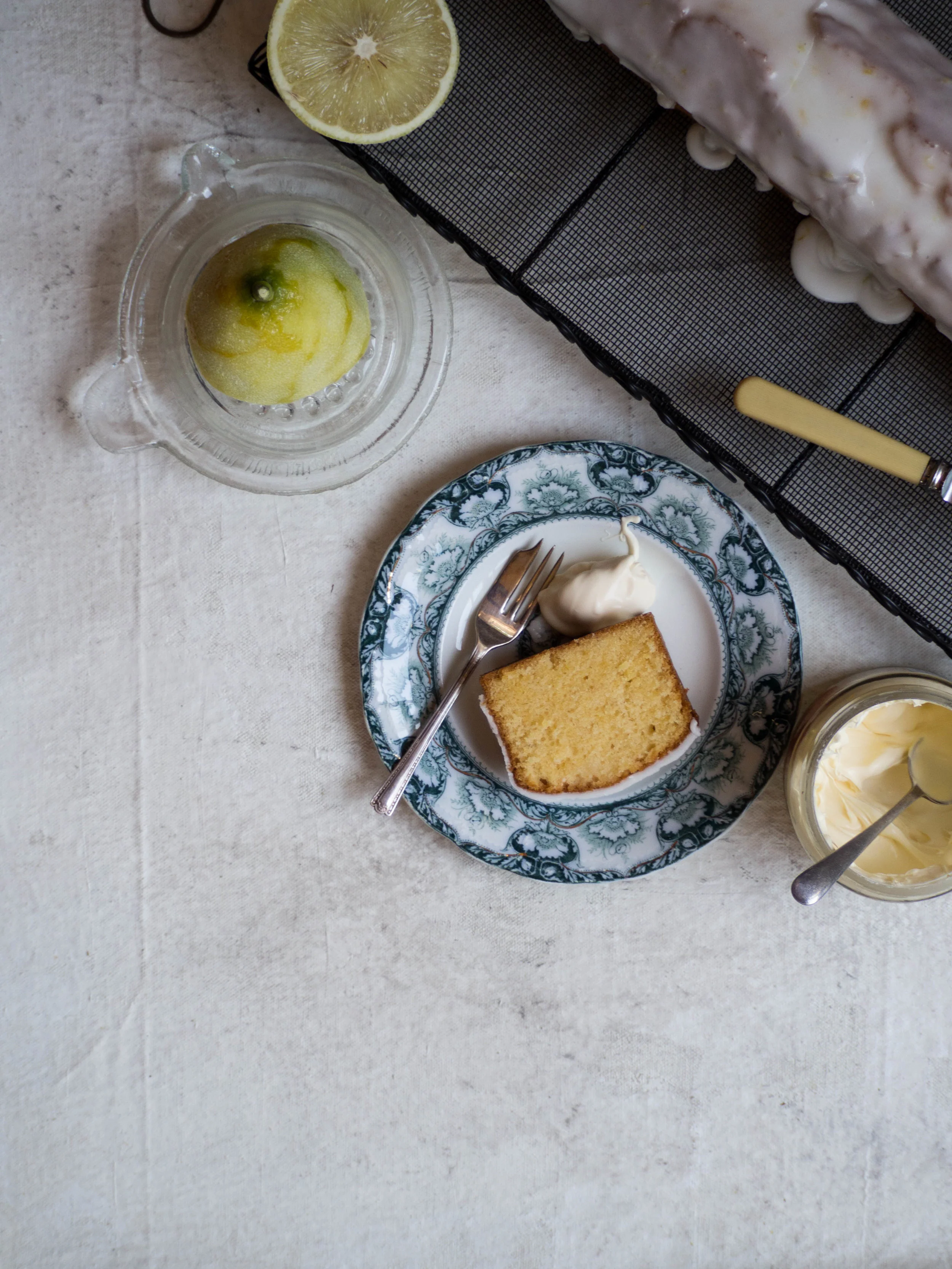
One of the options I settled on was this loaf cake, which can be made with any other citrus if you don’t have access to bergamots. The zest in the cake, and the juice in the syrup and icing give the cake a lovely flavour that will brighten up any dreary Winter’s day. 

What is your favourite citrus? Have you even eaten or baked with bergamots before? 

Bergamots growing on the tree before they have ripened

Bergamots growing on the tree before they have ripened

Bergamots on tree almost ripened

Bergamots on tree almost ripened

Bergamot on tree almost ripened

Bergamot on tree almost ripened

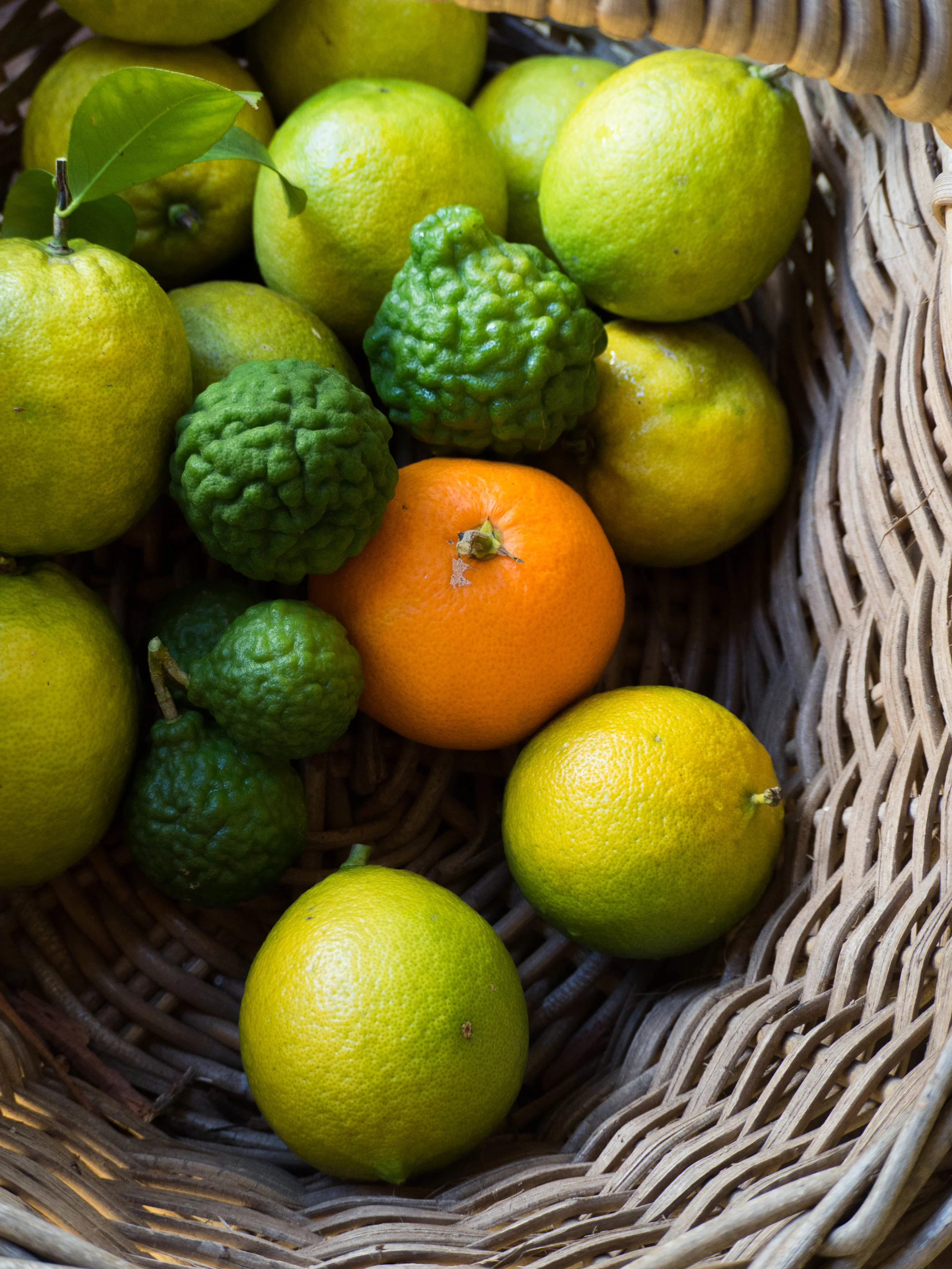
Homegrown citrus picked fresh from the garden - (top to bottom) lemonades, kaffir limes, mandarin & bergamots.

Homegrown citrus picked fresh from the garden - (top to bottom) lemonades, kaffir limes, mandarin & bergamots.

Bergamot Loaf Cake

Ingredients: 

250g margarine or softened unsalted butter

265g caster sugar

zest of 1 bergamot

3 eggs

265g plain flour

1 1/2 tsp baking powder

100ml milk 


Ingredients for the Syrup:

1 tbsp water

1tbsp caster sugar

2 tbsp bergamot juice (about half a small/medium bergamot)


Ingredients for the Icing: 

250g icing sugar (confectioners) 

2-3 tbsp bergamot juice, approx. (about half a small/medium bergamot)

remaining bergamot zest 


Method: 

Pre-heat oven to 180 degrees Celsius, and grease and line a loaf pan (31 x 7.5 x 8cm, approx). Allow some of the baking paper to come above the sides of the tin so it will be easy to remove the cake from the tin later. 

In using a stand mixer, beat the margarine and sugar until well combined and creamy. Add almost all of the bergamot zest, leaving some to add to the icing later. Mix well then add the eggs separately, ensuring they are well combined. 

In a separate bowl whisk together the flour and baking powder, then add half of this to the cake batter until just combined. Add the milk, then the remaining flour and mix until just combined. 

Transfer the cake batter into the prepared tin and bake for 50-60 minutes, or until the cake is golden, springy to the touch and cooked in the centre (check with a skewer). 

Once the cake is of out of the oven, make the bergamot syrup by gently heating all the ingredients in a small pan over low heat until the sugar has dissolved. Poke holes in the cake using a skewer, then spoon over the syrup so it evenly covers all of the cake. Allow the syrup to soak in and the cake to cool. 

Once the cake has cooled, remove from the tin using the overhanging baking paper to help. Make the icing by whisking the icing sugar in a medium bowl until most of the lumps have been broken up. Add the remaining bergamot zest and 2 tbsp of the juice and whisk until combined. If the icing is too thick add a little more juice (or water), if the icing is too runny add more icing sugar and mix. When you have a good consistency, ice the cake allowing the icing to run down the sides. 

Bergamot Loaf Cake

Bergamot Loaf Cake

Bergamot Loaf Cake

Bergamot Loaf Cake

Reference: ‘The Violet Bakery Cookbook’ by Claire Ptak (Ten Speed Press, 2015), pp.114-115.

Bergamot Loaf Cake served with cream

Bergamot Loaf Cake served with cream

In Cakes & Slices Tags Bergamot, Citrus, Homegrown
Comment
Buttermilk Crumpets with Homemade Butter, Poached Quince & Cream

Buttermilk Crumpets with Homemade Butter, Poached Quince & Cream

Buttermilk Crumpets & Homemade Butter

Kath July 7, 2017

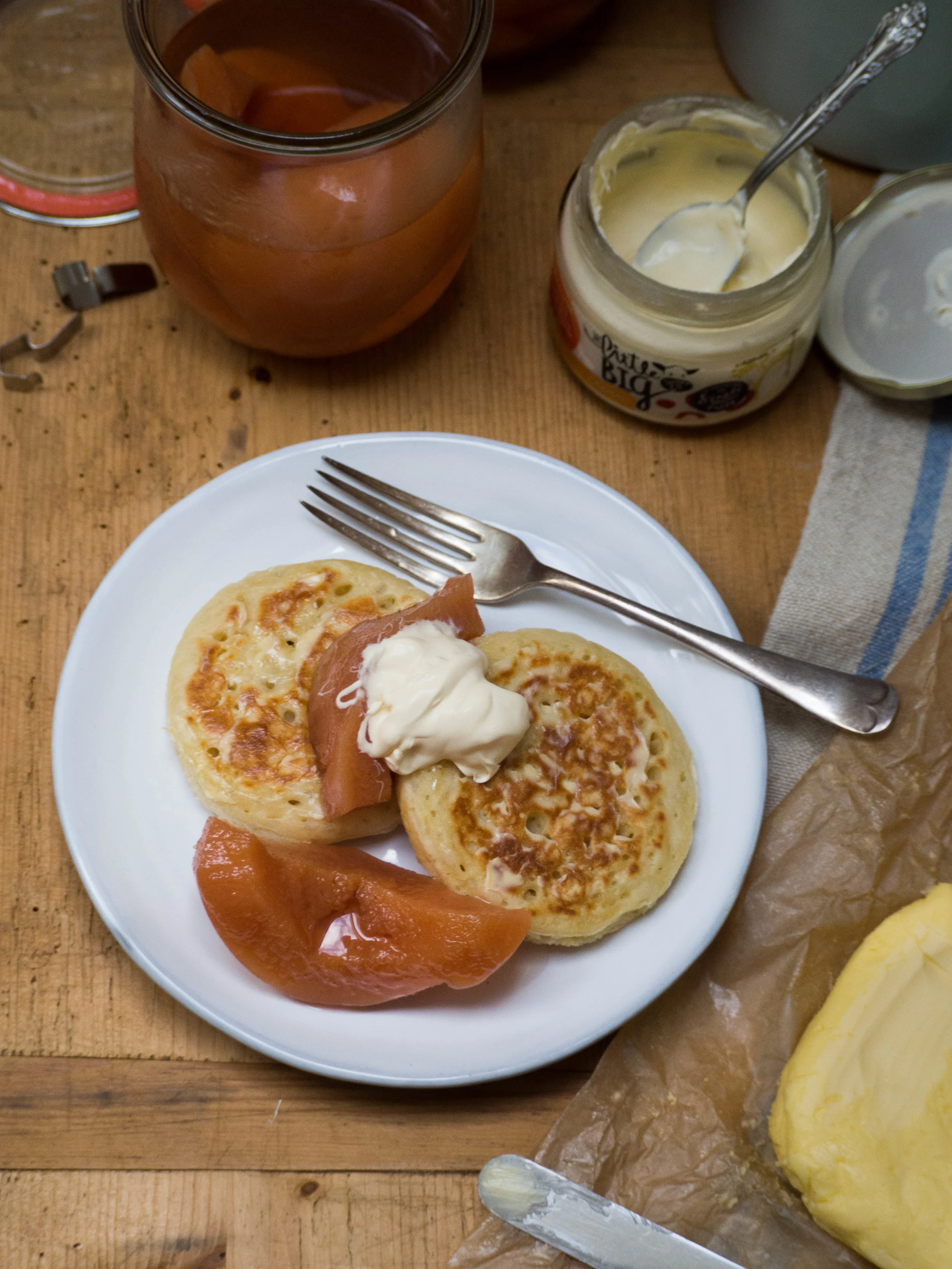
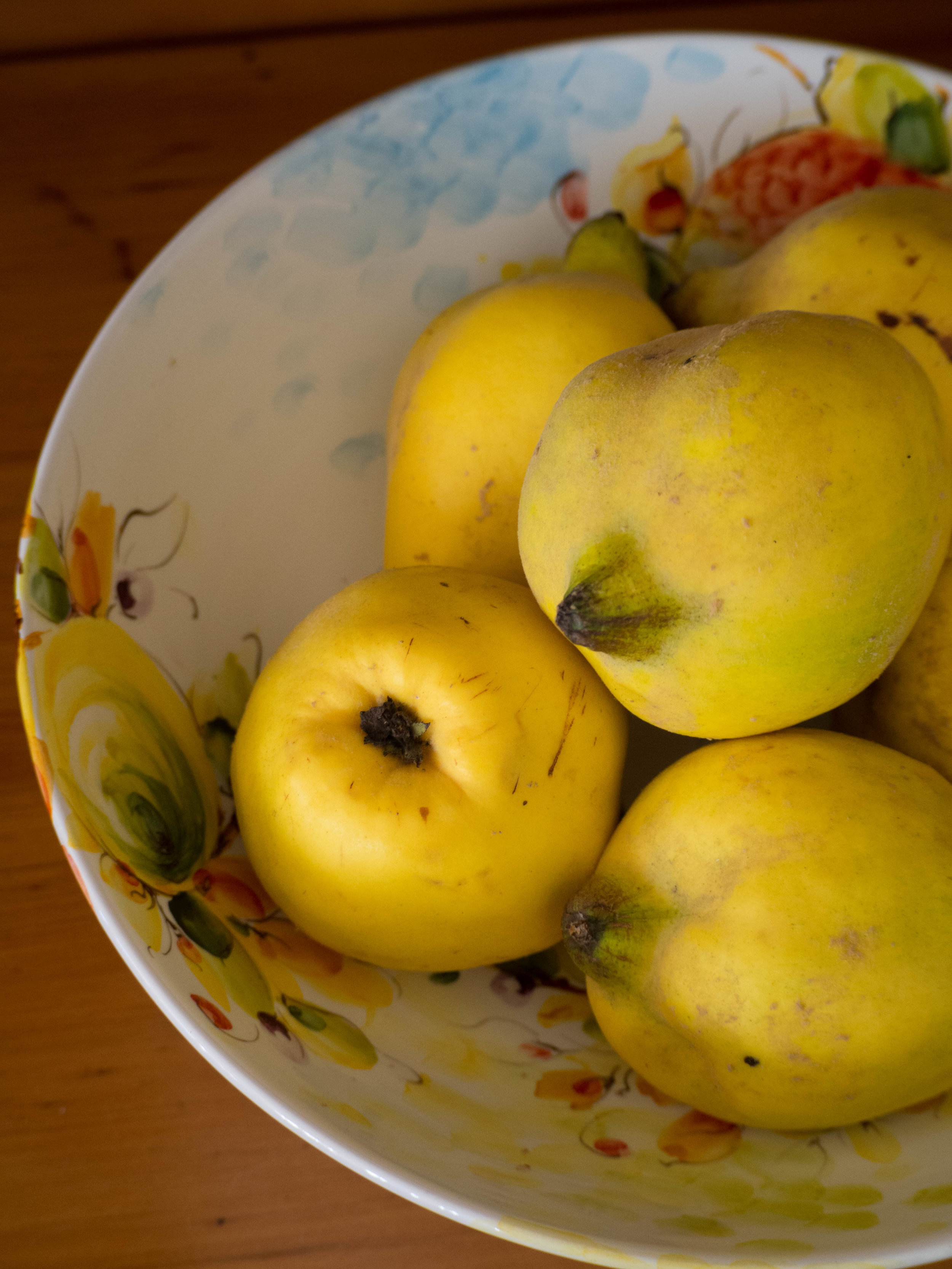
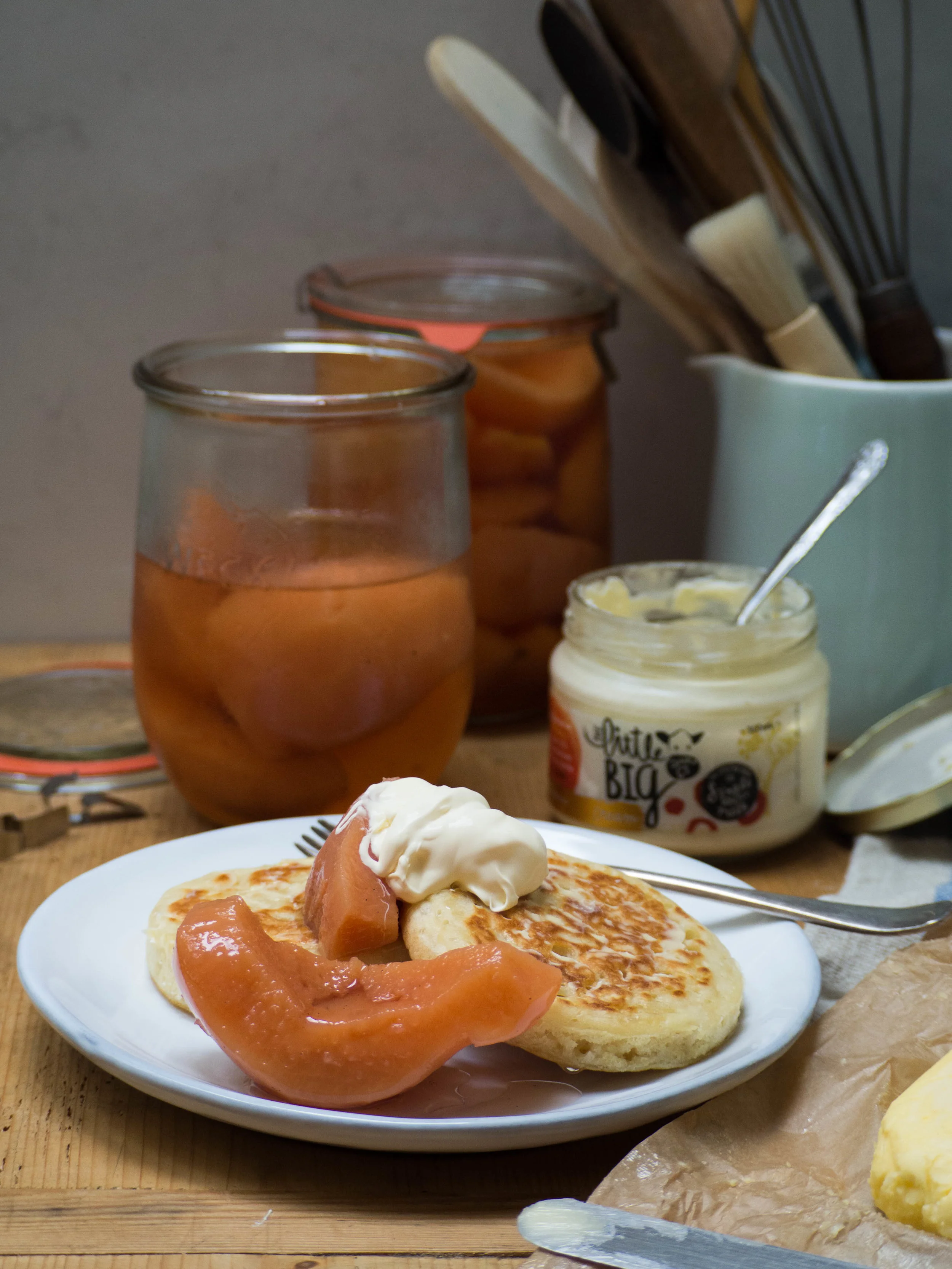
I was inspired to make crumpets again after having an amazing breakfast at Synonymous Cafe in Medlow Bath while I was away a few weeks ago. The crumpets we had there were really good, and the combination of accompaniments got me thinking that I should be serving crumpets at home with more than just butter/margarine and vegemite. Keeping with the travel inspiration theme, I decided to pair my crumpets with quince I had poached after buying some from the Agrestic Grocer in Orange while we were away, and amazing cream from Dubbo based Little Big Dairy Co whose milk we enjoyed at a few cafes in the Central West. 

I also Little Big Dairy Co's pouring cream to make the butter as well, and the resulting buttermilk can be used for this recipe also - just top up the quantity with another milk if you don’t get quite enough. I did this the second time I made these, and used Little Big Dairy Co’s unhomogenised full cream milk, which I think is the nicest milk I’ve ever tasted. The first time I made these I used Pepe Saya’s Buttermilk, which is a by product of the butter making process. As you can see I really like supporting great Australian small businesses, and buying local when possible. I love to support people who are passionate about food, and make a top quality product like Pepe Saya and Little Big Dairy Co. And I have to say it’s so worth it when you cook with products from these small producers and the taste is so much better than you’ve had before. 

Do you ever find cooking inspiration on holidays? And what are your favourite small food businesses and producers you love to support? Let me know in the comments below, I’d love to add to more to my list!

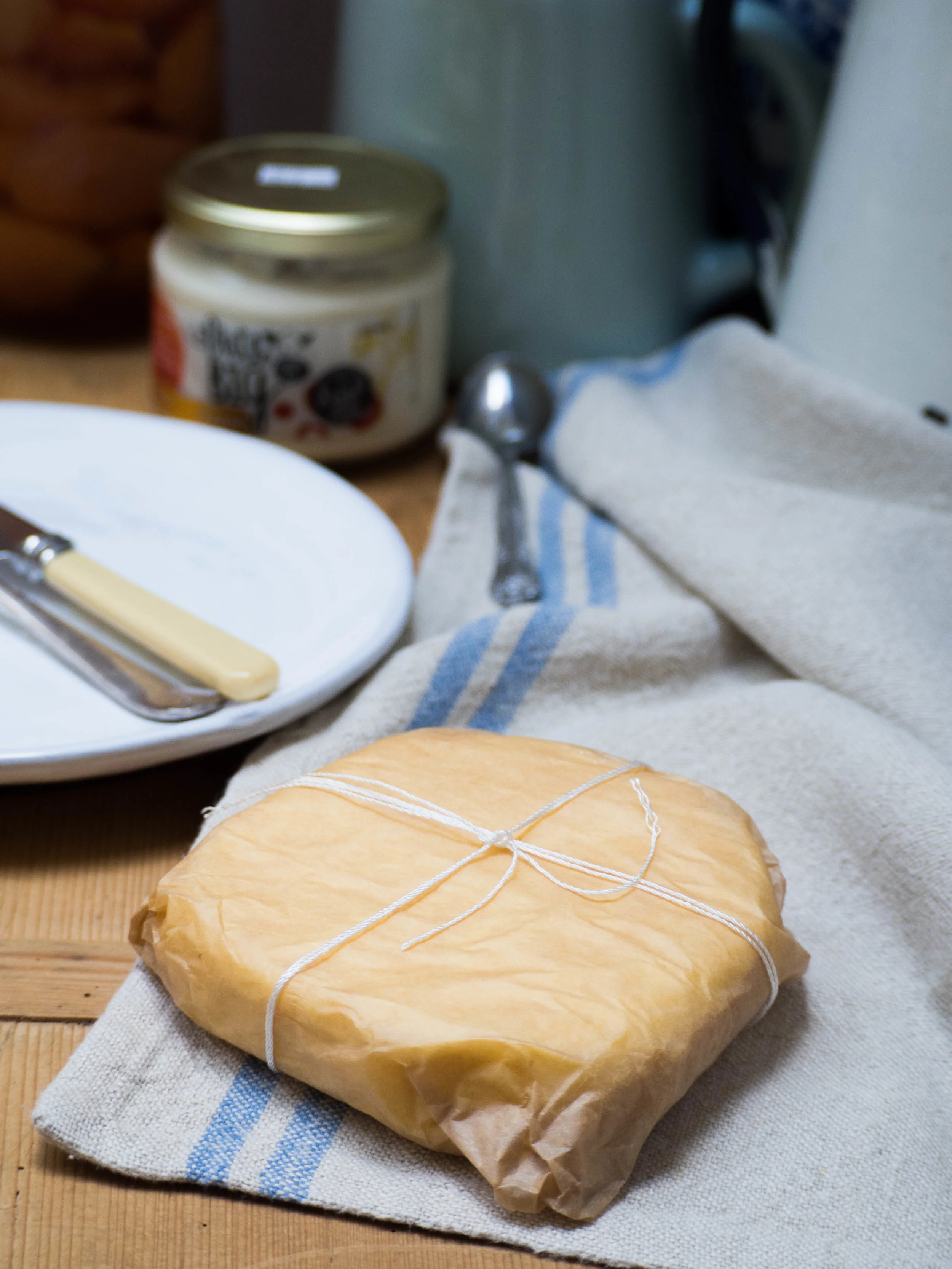
Homemade Butter
Quinces
Homemade Butter

Homemade Butter

Buttermilk Crumpets with Homemade Butter

Buttermilk Crumpets with Homemade Butter

Homemade Butter

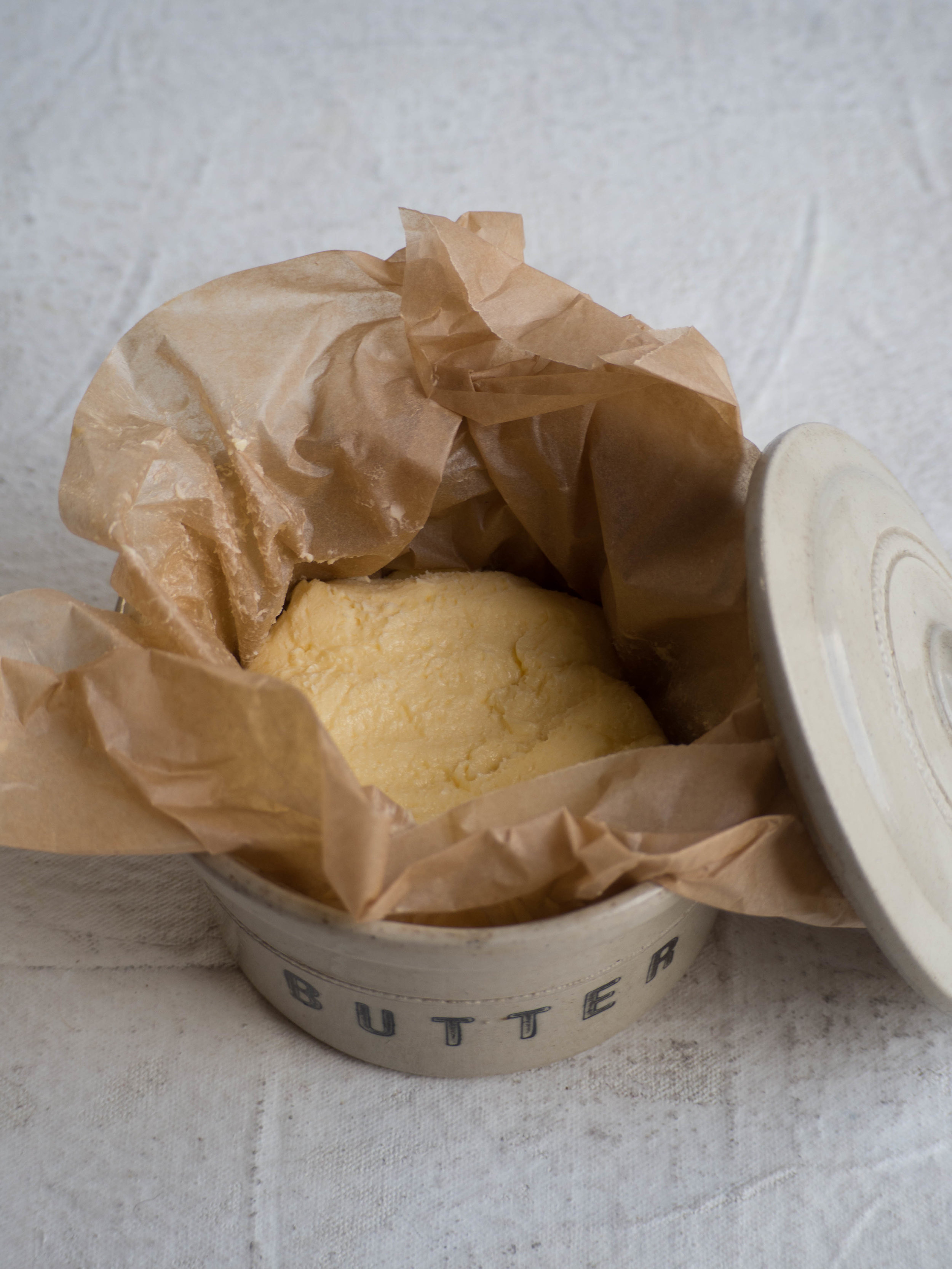
This is well worth the effort, and in fact it’s not really that much effort. All you need is a stand mixer, whisk attachment, muslin and some pouring cream. Use the best quality cream you can find, as it will produce a nicer quality butter and buttermilk. Both the butter and buttermilk can be used straight away for frozen or another time, so no need to stress about using a whole litre of cream, it won’t go to waste. You can however use any quantity of cream, as long as it is enough for the mixer to process.

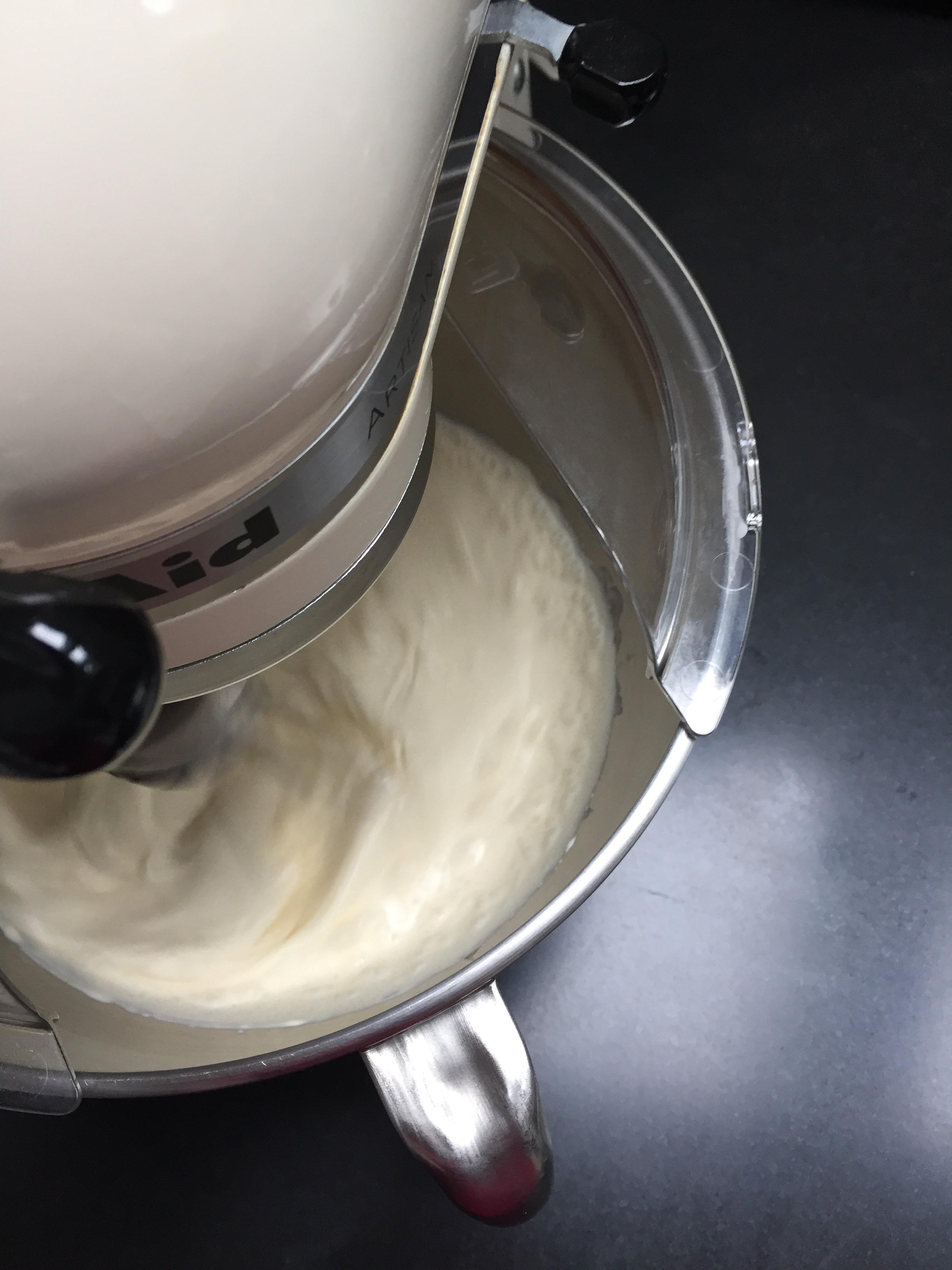
View fullsize 1. Whipping the Cream
View fullsize 2. The cream is thickening
View fullsize 3. Starting to turn yellow
View fullsize 4. Butter & Buttermilk are separating
View fullsize 5. Butter & Buttermilk ready for the next step
View fullsize Butter rinsed and kneaded and buttermilk strained

Ingredients:

1L good quality pouring cream 

Method: 

Pour the cream into the bowl of a stand mixture fitted with the whisk attachment. Start mixing on medium-high speed, covering the bowl with a tea towel if the cream is jumping out and making a mess. After a couple of minutes of constant mixing, the cream will thicken and become whipped. Continue mixing for a few more minutes (at least 5), and the cream will start to turn a yellow colour. In the next few minutes the butter will begin to separate from the buttermilk - you might want to cover the bowl with a tea towel again as I find the buttermilk jumps out of the bowl quite a lot. Continue mixing for a few more minutes, or until the butter and the buttermilk have completely separated. 

Place a large colander over a bowl, and line the colander with the muslin. Pour the butter and buttermilk over the colander, then squeeze out the butter over the colander using the muslin to release more of the buttermilk. The buttermilk can be used in the below recipe, kept in the fridge for a week or frozen for later use. 

Rinse the butter in cold water, then knead on a dry surface to release more of the buttermilk. This process is essential to give the butter a longer shelf life as, if too much buttermilk remains the butter will go off. Rinse the butter again and knead until most of the buttermilk as been released. Roll the butter into a log or shape into a disc and wrap with baking paper and seal. Use for the below recipe and store in the fridge (it should keep for a couple of months), or weigh it out into portions and freeze. 

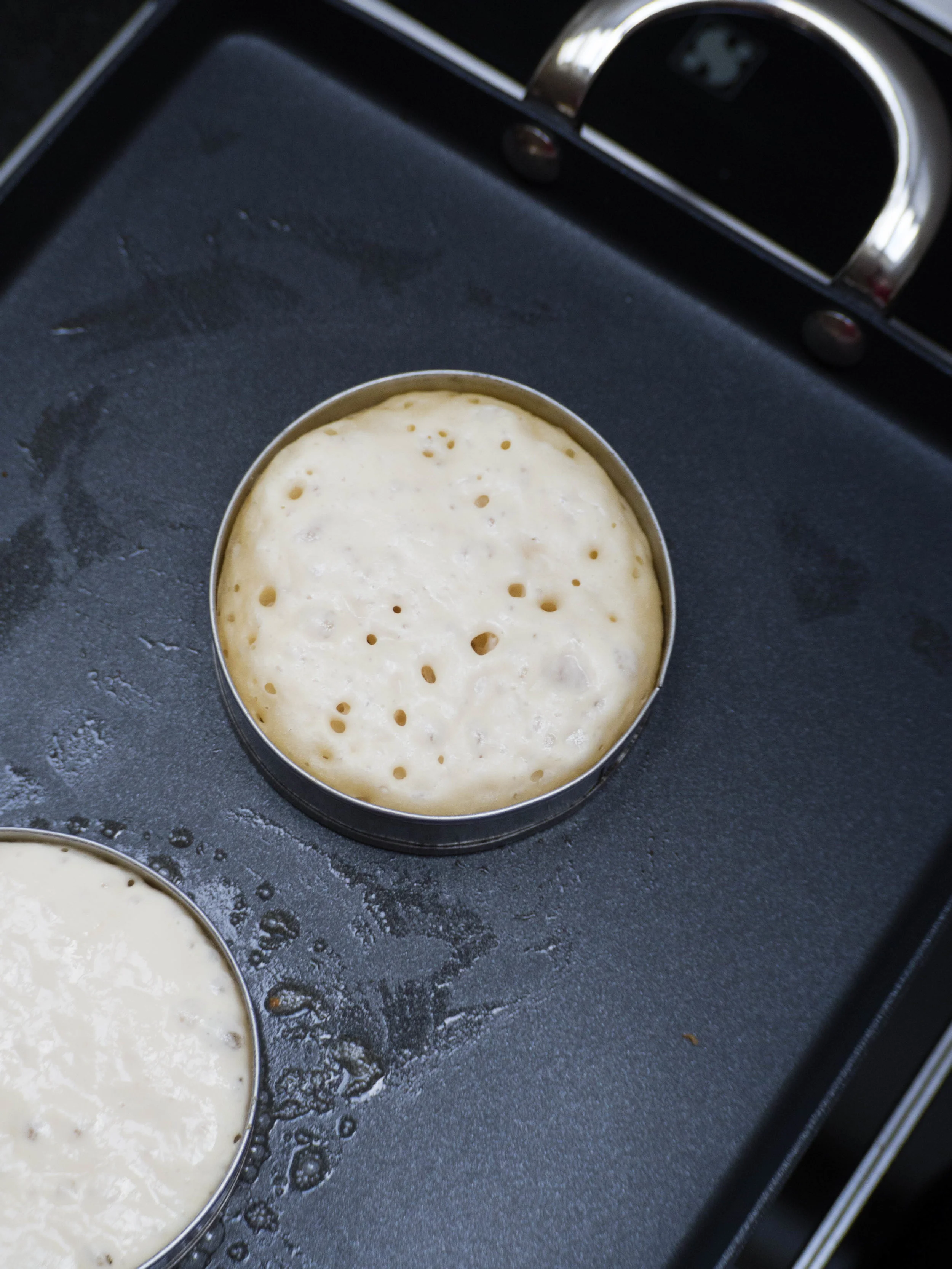
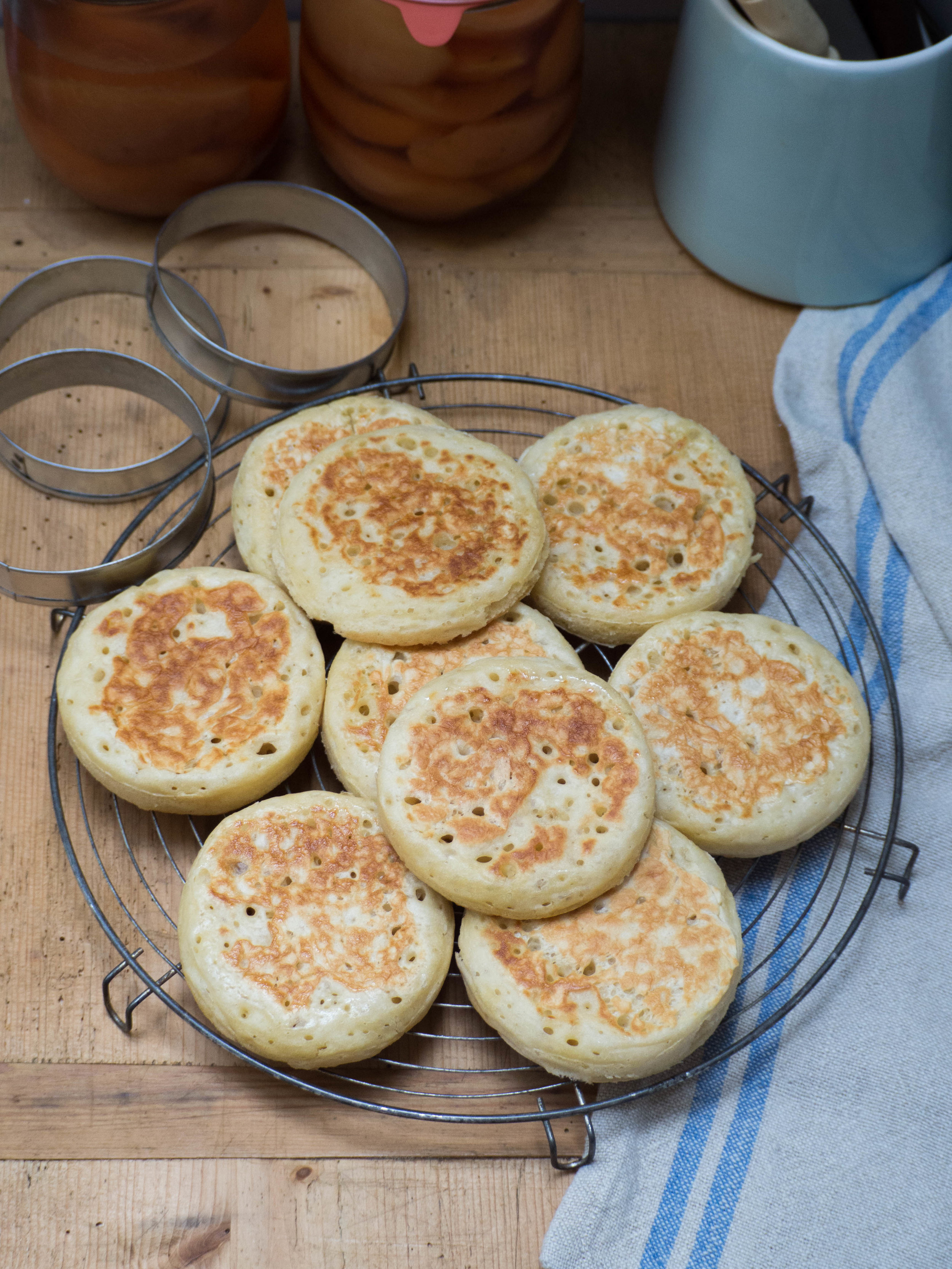
Cook crumpets on low heat in a crumpet ring until bubbles then holes appear, then flip

Cook crumpets on low heat in a crumpet ring until bubbles then holes appear, then flip

Homemade Buttermilk Crumpets Kulinary Adventures of Kath

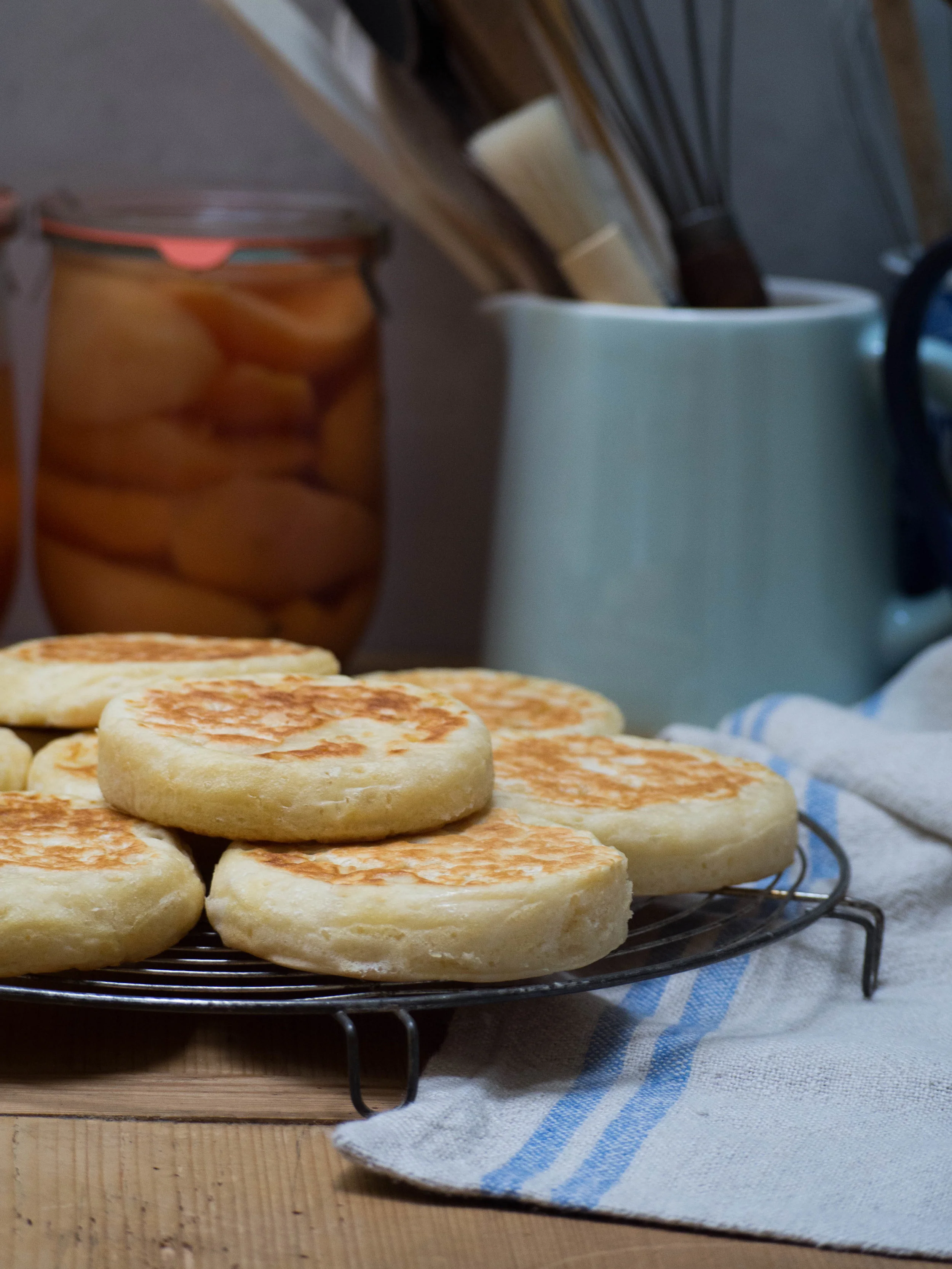
Buttermilk Crumpets

This was my second recent attempt at making crumpets from scratch. I have posted a recipe for crumpets before, but have since found a new recipe I like better and have worked out the best way to cook them. They key is to cook them low and slow, so you give the tops time to bubble and burst, giving that distinctive hole-y top crumpet look, without over cooking the bottoms. You will need crumpet rings for this recipe but you can use egg rings, which will give a smaller fatter or larger thinner crumpet depending on their size. I had been searching for crumpet rings all over for a few years, and finally found some at the Lost & Found Department where they had sourced crumpet rings and handmade cake tins etc from a supplier in Tasmania (if my recollection of the story is correct). 

As I mentioned above, I used buttermilk from the butter making process for this recipe. If you can’t get any or aren’t making the homemade butter, just substitute with regular or skim milk. Don’t substitute with cultured buttermilk (the thicker variety found in supermarkets), I’m not sure the thickness of it will work well with this recipe. 

Homemade Buttermilk Crumpets Kulinary Adventures of Kath

Ingredients

275ml buttermilk (not cultured)

55ml water

1tsp caster sugar 

250g strong white flour (bread flour)

8g dried fast action yeast

1/2 tsp bicarb soda

50ml warm water

butter for cooking, and to serve

poached quinces, to serve (optional)

thick/clotted/dollop cream, to serve (optional) 

Method:

Warm the milk and water (55ml) in a saucepan over low heat, then add the sugar and stir. Don’t overheat the milk. Place the flour into a large bowl and stir in the yeast. Pour in the warmed milk mixture and mix together until smooth. Cover the bowl with plastic wrap and leave in a warm place to rise. The batter will be ready when it has risen and become frothy and full of bubbles, this should take around hour, but leave for longer if the batter hasn’t become very bubbly after an hour. 

When the batter is ready, mix the bicarb soda with water (50ml) then mix into the batter until smooth. 

Grease the insides of the crumpet rings with butter, and heat a large flat plan on low heat. Grease the pan with some butter and place the rings on to the pan (how many you use at one time will depend on how large your pan is). 

Fill the crumpet rings with batter, until the surface of the ring on the pan is fully covered and the batter comes up around a quarter to half way up the crumpet ring (this will depend on how big you want your crumpets to be, allowing for them to rise a little). 

Cook for about 5 minutes, keeping the pan on low heat, or until bubbles then holes appear on the top of each crumpet. This is a slow process so don’t be tempted to rush it. 

Flip the crumpets over once the holes have appeared on the tops, and cook for another couple of minutes or until golden - you can remove the crumpet rings at this point, and allow them to cool a little before re-greasing them to use again. Continue with the remaining batter. I found the batter made about 10 crumpets.

Serve straight from the pan, or warmed up later on under a grill with fresh butter, cream and poached quinces, or any other topping you fancy. 

How to make Crumpets - Kulinary Adventures of Kath
Buttermilk Crumpets with Homemade Butter, Poached Quince & Cream

Buttermilk Crumpets with Homemade Butter, Poached Quince & Cream

References: ‘Fortnum & Mason The Cookbook’ by Tom Parker Bowles (4th Estate, 2016), p.60; ‘Real Food Projects’ by Kate Walsh (Murdoch Books, 2016) pp.92-3.

How to make Crumpets - Kulinary Adventures of Kath
In Breakfast, Travel Tags Crumpets, Buttermilk, Homemade Butter, Butter, Quince, Cream, Little Big Dairy Co, Lost & Found Department
Comment
  • The Blog
  • Older
  • Newer

recipes

  • Biscuits/Cookies 40
  • Breads Etc. 9
  • Breakfast 7
  • Cakes & Slices 68
  • Confectionary 5
  • Drinks 6
  • Events 14
  • Food Photography Tips 3
  • From The Mailing List 24
  • Heirloom Recipes 12
  • Holidays 45
  • Ice Cream 9
  • Jams Preserves & Spreads 9
  • Muffins 4
  • Off the Shelf 51
  • Other Desserts 25
  • Savoury Dishes/Meals 15
  • Scones 4
  • Tarts & Pastry 9
  • Travel 13

Sign up to Friday Food Chat with Kath, a weekly newsletter for more food, baking, cookbook chat and more!

Sign Up Here!
instagram-unauth pinterest facebook url

Website Accessibility: To enable text to speech function on the blog, click the sound button to the right of each blog post.

All images & content are the property of Kathryn Vincent, unless stated otherwise. Please do not use without permission.

Kulinary Adventures of Kath

Food Photography, Recipes & Baking

instagram-unauth pinterest facebook url